


 English
 中文简体
Introduction to Portable Industrial Air Coolers As temperatures rise, keeping large spaces cool and ...
READ MORE
Best Electric Wall Heaters for Large Rooms: Sizing, Safety and Buying Tips
Content
- 1 Why Large Rooms Behave Differently
- 2 Sizing: Wattage First, Then Airflow
- 3 Wall-Mounted Fan Heaters: The Practical Default
- 4 When One Wall Heater Is Not Enough
- 5 Radiant Heat for High Ceilings and Awkward Corners
- 6 Comparing the Main Options at a Glance
- 7 Safety and Installation Checks Before You Buy
- 8 A Note for Buyers, Distributors and Installers
A 400-square-foot living room with nine-foot ceilings is not simply a bigger bedroom. It holds several times the air volume, it usually loses heat through more than one exterior wall, and it is often open to a hallway or staircase that quietly carries warmth away. That is why the heater that keeps a spare room comfortable can feel almost useless in a great room.
We have been building electric heaters in Cixi, Ningbo, since 2007, and most of the questions we get from buyers come back to one thing: matching output to space. This guide covers what the best electric wall heaters for large rooms have in common — wattage, airflow, control and safety — and where a wall-mounted unit stops being the right answer.
Why Large Rooms Behave Differently
Before comparing models, it helps to see the problem the way a heater sees it. Four factors decide whether a large room feels genuinely warm or merely less cold:
- Air volume. A 400 sq ft room with 9 ft ceilings holds around 3,600 cubic feet of air, roughly three times a typical bedroom.
- Stratification. Warm air rises and stays near the ceiling unless a fan or a strong convection current mixes it back down.
- Open plan and circulation. Stairwells, corridors and double-height spaces pull heated air out of the room you are trying to warm.
- Cold surfaces. Large glazed walls, exposed concrete and uninsulated exterior walls absorb radiant heat, so the air feels cooler than the thermostat suggests.
None of this rules out wall-mounted heating. It simply explains why a single small unit rarely works in a large room, and why airflow matters as much as raw wattage.
Sizing: Wattage First, Then Airflow
The traditional starting point is 10 watts per square foot of floor area at a standard 8-foot ceiling. In an open-plan or high-ceiling space, add 25 to 50 percent, and add more again if the room is poorly insulated or heavily glazed.
| Floor area | Ceiling height | Approximate heat needed | Typical setup |
|---|---|---|---|
| Up to 150 sq ft | 8 ft | 1,500 W | One wall-mounted heater |
| 150 to 300 sq ft | 8 ft | 2,000 to 3,000 W | One 2,000 W wall heater plus one supplementary unit |
| 300 to 450 sq ft | 8 to 9 ft | 3,000 to 4,500 W | Two heaters on separate circuits |
| 450 sq ft and above | 9 ft or more | 4,500 W and up | Zoned heating, often hardwired |
Electrical reality shapes the answer as much as physics does. A 120 V branch circuit protected by a 15 A breaker should not be loaded continuously beyond roughly 1,400 to 1,500 W, and most plug-in wall heaters are built around that ceiling. Higher output means a dedicated circuit, a 240 V hardwired unit, or two heaters working in different parts of the room.
Wall-Mounted Fan Heaters: The Practical Default
Fan-forced wall heaters suit large rooms better than most people expect, because the fan does two jobs at once: it pushes warmed air into the occupied zone, and it breaks up the warm layer trapped near the ceiling. A 2,000 W unit with an adjustable thermostat, a timer and an ECO setting is the configuration we build most often for exactly this reason.
Our HFH2000 and HFH2000T follow that pattern — a wall-mounted fan heater with a thermostat, designed to be fixed out of the way and left to hold a set temperature rather than switched on and off. In a large room, the thermostat setting matters more than maximum output, because a heater running steadily at a moderate level keeps the whole space even, while short bursts only warm the air directly around the unit.
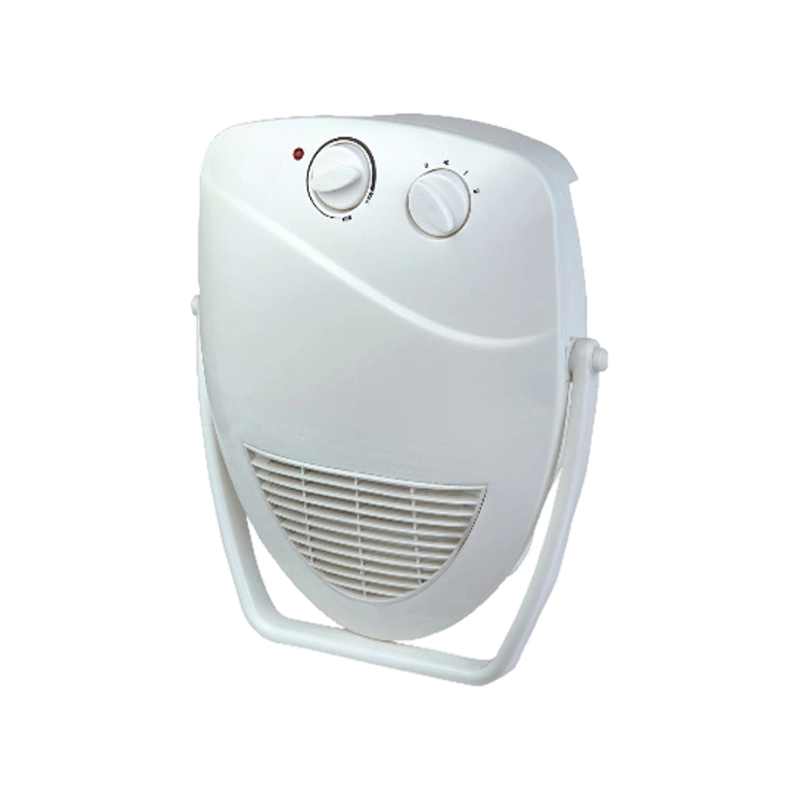 HFH-2000 Wall-Mounted Fan Heater with Adjustable ThermostatWall-mounted fan heater with 1000W/2000W heating, cool blow, overheat protection, and thermostat; suited to steady background warmth in large rooms.View Product →
Two practical notes from the production line. Mount the unit where air can circulate freely, because a heater tucked behind a sofa or curtain recycles its own hot air and shuts down early. And if the room is genuinely large, plan for a second heat source instead of a bigger single unit.
When One Wall Heater Is Not Enough
In rooms above roughly 300 sq ft, the most reliable approach is usually a wall heater for directed warmth plus a freestanding unit for steady background heat. Oil-filled radiators fill that second role well: they are silent, they keep releasing heat after the power cuts off, and their gentle convection current helps a large space avoid cold corners. The trade-off is speed, since they take longer to bring a big room up to temperature.
If you want to understand how these units handle efficiency and temperature control before choosing one, our overview of high-efficiency, low-noise oil-filled radiators is a useful starting point.
For very large or open-plan rooms we build radiators specifically sized for the job, such as the NYC oil-filled radiator for large-room heating, which pairs a higher heat output with a thermostat and tip-over protection.
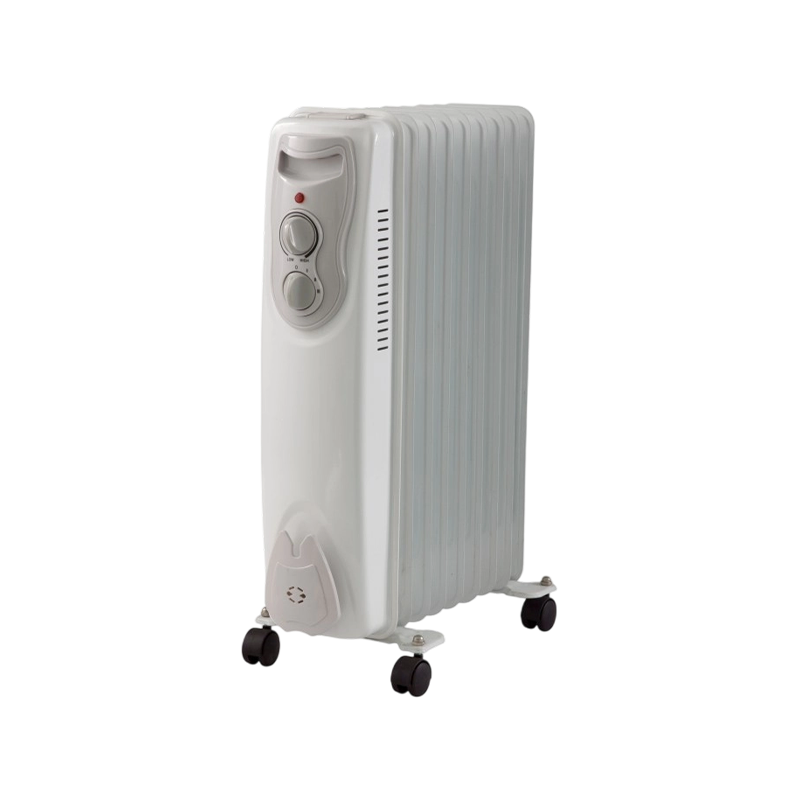 NY-C Oil-Filled Radiator for Large Room HeatingOil-filled radiator with three heat settings, adjustable thermostat, tip-over protection, castors, and cord storage; intended for large or open-plan rooms.View Product →
Placement deserves a moment of thought. Setting the radiator along the coldest exterior wall, rather than in the middle of the room, creates a slow curtain of warm air that offsets the draught coming off the glazing.
Radiant Heat for High Ceilings and Awkward Corners
Carbon and infrared heaters work differently from everything above: instead of warming the air, they warm people and surfaces directly. In a room with a twelve-foot ceiling that becomes a real advantage, because you are no longer paying to heat air that will spend the evening near the roof.
Carbon heaters such as the FJCH19 are a sensible supplement in large living rooms and offices. Placed near a seating area, they deliver almost immediate comfort, felt in seconds rather than minutes. They are not a whole-room solution on their own, but as a targeted layer on top of a thermostat-controlled wall heater they shorten the time the main heater has to run at full power.
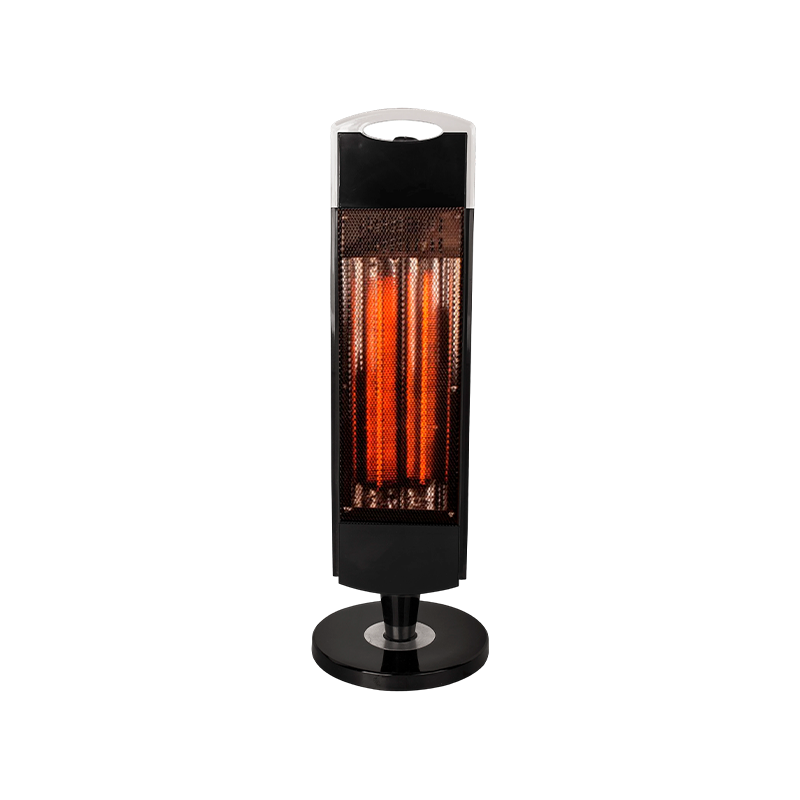 FJ-CH-19 Carbon Heater for Home and OfficeCarbon fiber heater with 450W/900W settings, wide oscillation, and tip-over protection; useful as targeted supplementary warmth near seating areas.View Product →
Comparing the Main Options at a Glance
| Type | Best suited to | How it heats | Watch out for |
|---|---|---|---|
| Wall-mounted fan heater | Rooms up to about 300 sq ft, or the main zone of a larger space | Fan-driven convection | Fan noise; needs free airflow around the unit |
| Oil-filled radiator | Steady background heat in large rooms | Silent convection with heat retention | Slow warm-up time |
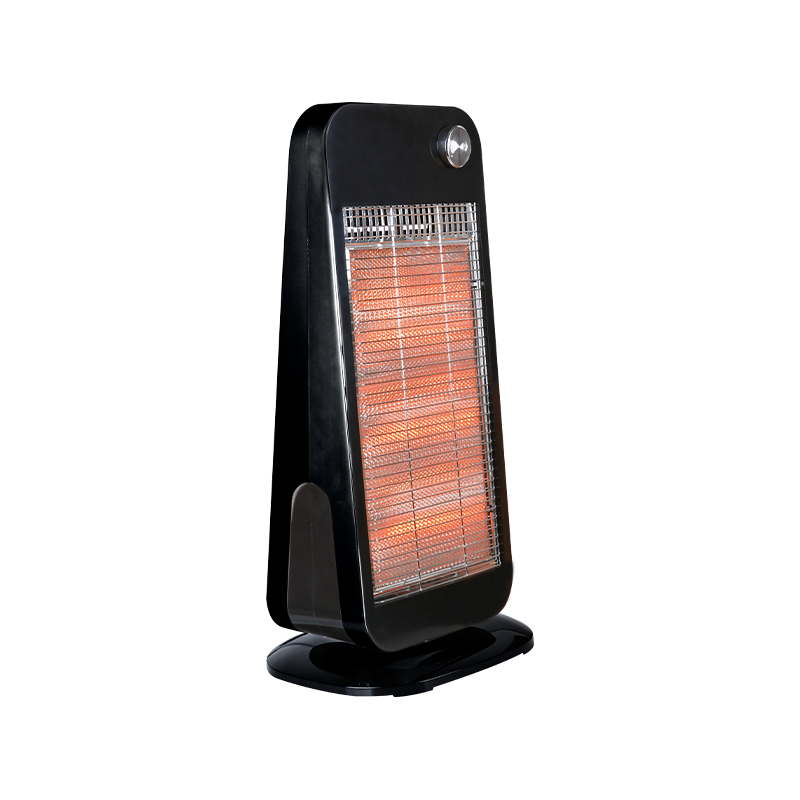
| Carbon or infrared heater | High ceilings, spot comfort, draughty rooms | Radiant heat to people and surfaces | Only heats what it faces |
| Quartz or halogen heater | Quick directional warmth in small zones | Instant radiant glow | Small coverage area |
Safety and Installation Checks Before You Buy
Once the wattage question is settled, work through the practical list below. These are the points that most often decide whether a large-room installation feels effortless or frustrating.
- Circuit capacity. Anything above 1,500 W should have its own circuit; never rely on an extension lead for a high-output heater.
- Overheat and tip-over protection. Standard on a serious heater, and worth confirming in writing rather than assuming.
- Thermostat and timer. A programmable thermostat prevents the habit of leaving a large heater on full power all evening.
- Ingress protection. Bathrooms, kitchens and covered outdoor areas need an appropriate IP rating, not just a general-purpose unit.
- Certification. Buyers shipping to Europe should confirm the exact model carries the required markings, rather than assuming the whole range does.
- Mounting height and clearance. Follow the manufacturer instructions for distance to floors, curtains and furniture.
- Wall structure. A fixed wall heater needs a solid fixing into studs or masonry, and you should check cable routing before you drill.
A Note for Buyers, Distributors and Installers
If you are sourcing rather than installing, the same logic applies one step earlier. A large-room heater is a semi-permanent fixture in most markets, which means certification, plug type, voltage, packaging and spare parts all have to be right the first time. We build our electric heater range with European-market configurations, CE-compliant models and OEM options such as custom logos and colourways, from our own factory in Cixi, close to Ningbo port.
Ask any supplier for three things: a clear wattage and voltage matrix, the safety features in writing, and confirmation of which certifications apply to the specific model you are ordering.
The best electric wall heater for a large room is rarely a single appliance. It is usually a 2,000 W thermostat-controlled wall unit doing the steady work, a quiet radiator or radiant heater covering the edges, and a wiring plan that lets both run without tripping a breaker. Get those three things right and a large room stops being a heating problem.
PREV:No previous article
NEXT:Best Electric Heaters for Homes: A Manufacturer's Guide to Warmth and Comfort
NEXT:Best Electric Heaters for Homes: A Manufacturer's Guide to Warmth and Comfort
Interested in cooperation or have questions?
News
-
-
An electric fan heater is a popular device used to provide quick and efficient warmth in smaller spa...
READ MORE -
1. Exploring Fan Heaters: Efficient Heating Solutions The Basic Definition and Working Principle of ...
READ MORE -
Introduction to Tea Bar Machines What is a Tea Bar Machine? A tea bar machine represents a profound ...
READ MORE

- Add:
No. 1408, Guanfu Road, Fuhai Town, Cixi City, Ningbo City, Zhejiang Province, China. - Email:
sales@fsdomy.com - Tel:
0086-574-63567602 - Phone:
+86 13805816547
-
Get In Touch
-
Quick Links
Home Products About Us FAQ News Contact -
product Center
Electric Heater Water Dispenser Air Fan & Cooling Spare Part -
NEWS & INSIGHTS
Company News Instury News -
Follow
