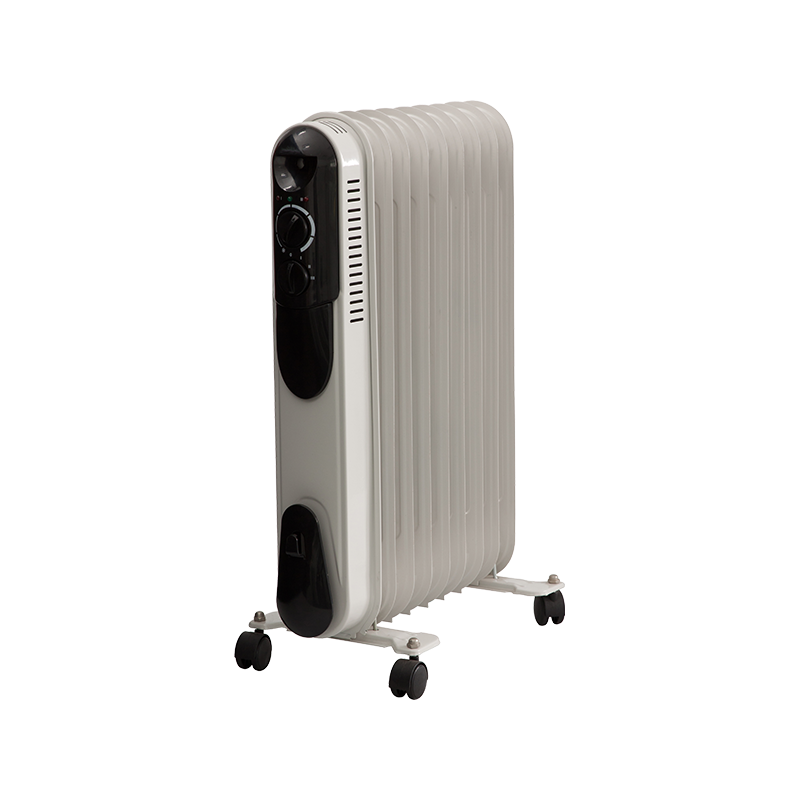
In the sophisticated landscape of modern thermal processing, the industrial electric heater serves as the primary driver of energy conversion for a multitude of sectors, including oil and gas, chemical synthesis, food processing, and pharmaceutical manufacturing. As global industries move toward electrification to meet decarbonization goals in 2026, the reliance on high-efficiency electric heating has never been greater. However, selecting the “right” heater is an engineering challenge that extends far beyond simply matching voltage and wattage. It requires a meticulous analysis of heat transfer coefficients, fluid dynamics, and metallurgical compatibility. Choosing an incorrect heater type can lead to catastrophic equipment failure, product degradation, or significant energy waste.
The Science of Selection: Understanding Heat Transfer Dynamics and Watt Density
The foundation of a successful industrial heating installation lies in the fundamental principles of thermodynamics. An electric heater operates by passing an electric current through a resistive element, generating heat that must then be efficiently transferred to a medium—whether it be a liquid, a gas, or a solid. The efficiency of this transfer is governed by the laws of conduction and convection. For any engineer, the two most critical parameters to evaluate during the design phase are Watt Density and Sheath Material Compatibility. These factors dictate not only the performance of the heater but also its total lifecycle cost.
Watt Density: The Balance of Thermal Flux and Material Life
Watt density is defined as the total wattage of the heating element divided by the effective heated surface area, typically measured in ** or **. This metric represents the “Thermal Flux” and is the primary indicator of how hot the element’s surface will become. If the watt density is too high for a given medium, the heat cannot be dissipated quickly enough, causing the element to exceed its maximum operating temperature and burn out.
- Liquid Heating Applications: In water-based systems, high watt densities (8-12 ) are often acceptable because water has a high convective heat transfer coefficient. However, for high-viscosity oils, the watt density must be lowered significantly (1.5-3 ) to prevent “Coking”—the carbonization of the oil on the heater’s surface, which creates an insulating layer and leads to premature failure.
- Gas and Air Heating: Since air is an inherently poor thermal conductor, industrial air heaters require much lower watt densities to prevent “Meltdown.” Utilizing finned elements can increase the surface area, allowing for higher total wattage without increasing the flux density.
Sheath Material Selection: Combating Corrosion and Oxidation
The sheath is the outer protective layer of the heating element, and its selection is a critical metallurgical decision. The medium being heated dictates the chemical resistance required.
- Incoloy 800/840: These nickel-chromium-iron alloys are the industry standard for high-temperature air and gas heating due to their resistance to oxidation and scaling.
- Stainless Steel 316L: Mandatory for the food and beverage industry, this material offers excellent resistance to organic chemicals and hygienic properties required for pharmaceutical synthesis.
- Titanium and Teflon Coatings: For highly aggressive chemical baths or seawater applications, specialized materials like Titanium or Fluoropolymer (PTFE) coatings are necessary to prevent pitting and stress corrosion cracking. Selecting the wrong sheath material can lead to “Contamination” of the process fluid and catastrophic failure of the heating system.
Operational Excellence: Comparing Immersion, Circulation, and Band Heaters
Once the material science and flux requirements are established, the focus of the engineer must turn to the physical configuration of the heater. Industrial heaters are categorized by how they interface with the process medium. In 2026, the industry has seen a massive shift toward “Smart Heating Systems” where the heater type is integrated with advanced SCR (Silicon Controlled Rectifier) power controllers to provide a seamless, modulated thermal response.
Immersion Heaters: High-Efficiency Direct Heating Solutions
Immersion heaters are designed for direct contact with the fluid, offering nearly 100% thermal efficiency. They are typically installed via flanged connections or threaded screw plugs into tanks and pressure vessels.
- Flanged Immersion Heaters: These consist of multiple hairpin-shaped tubular elements welded into a standard pipe flange. They are the workhorses of large-scale chemical reactors and oil storage tanks. Their design allows for the integration of multiple “Thermostats” and “High-Limit Sensors” directly into the element bundle, ensuring a high level of safety and precision.
- Screw Plug Heaters: Compact and versatile, these are ideal for smaller laboratory equipment or clean water systems. Because they are immersed, they provide rapid heat-up times and excellent temperature uniformity. For designers, the ability to specify “Zoned Heating” within a single immersion bundle allows for even greater control over the process temperature profile.
Circulation and Band Heaters: Managing Flow and Surface Conduction
When a process requires a medium to be heated while in motion, Circulation Heaters (also known as “In-Line Heaters”) are the preferred solution.
- Circulation Heaters: These are essentially immersion heaters encased in a pressure vessel. As fluid flows through the vessel, it absorbs heat via forced convection. This configuration is widely used in steam superheating and the pre-heating of fuel oils. The critical design factor here is the “Pressure Drop” across the vessel, which must be minimized to maintain system efficiency.
- Band and Strip Heaters: For the plastics and packaging industries, heating a solid surface is often required. Band Heaters wrap around cylindrical surfaces like injection molding barrels. Modern “Ceramic Band Heaters” incorporate a layer of insulation to reduce radiant heat loss to the factory floor, improving energy efficiency by up to 25%. Understanding when to use conduction-based band heating versus convection-based flow heating is essential for optimizing the energy footprint of an industrial facility.
Technical Reference: Industrial Heater Selection Matrix
This table provides a data-driven comparison of common industrial heating configurations to assist in the procurement and design process.
| Medium to be Heated |
Heater Type |
Optimal Sheath Material |
Typical Watt Density () |
| Potable Water |
Screw Plug / Flanged |
Copper / Stainless Steel |
8 - 12 |
| Heavy Crude Oil |
Circulation / Flanged |
Steel / Incoloy |
1.5 - 2.5 |
| Nitrogen / Clean Air |
Circulation / Tubular |
Incoloy 800 |
2 - 4 |
| Corrosive Acids |
Over-the-Side |
Titanium / PTFE Coated |
3 - 5 |
| Molten Salts |
High-Temp Immersion |
Inconel 600 |
4 - 6 |
| Plastic Extruders |
Band / Cartridge |
Stainless Steel |
5 - 8 |
Frequently Asked Questions (FAQ)
What is the advantage of SCR power control over mechanical contactors?
A mechanical contactor provides “On/Off” control, which leads to temperature cycling and thermal fatigue in the element. An SCR (Silicon Controlled Rectifier) provides a continuous, modulated flow of power, which stabilizes the process temperature to within ±0.5°C and can double the lifespan of the heating element.
Why is “Cold Section” design important in immersion heaters?
The “Cold Section” is the part of the heating element that does not generate heat. It must be long enough to extend past the threaded or flanged connection into the fluid. If the heated part of the element is inside the connection area (where there is no fluid to carry heat away), the heater will “Burn Out” instantly.
How do I prevent scale buildup on my heater?
In water applications, scale (calcium buildup) acts as an insulator. This causes the internal temperature of the element to rise until failure. To prevent this, reduce the watt density, use a “Teflon” coating, or implement water softening systems.
Technical References and Standards
- UL 1030: Standard for Sheathed Heating Elements — Safety and construction requirements for industrial heaters.
- NEC Article 427: Fixed Electric Heating Equipment for Pipelines and Vessels — Regulatory guidelines for industrial installations.
- ASME Section VIII: Rules for Construction of Pressure Vessels — Required standards for Circulation Heater housings.
- IEEE 515: Standard for the Testing, Design, and Installation of Electrical Resistance Trace Heating.



 English
 中文简体
中文简体