What Size Electric Fan Heater Do You Need for a Large Living Room?
When the winter chill sets in, finding the right electric fan heater for a large living room is the difference between cozy comfort and a frustrating waste of electricity. Unlike small bedrooms or enclosed offices, large open-plan living areas present unique challenges due to high ceilings, large windows, and inevitable drafts. To choose the right size, you must understand that “size” in the world of heating refers to thermal output, typically measured in Watts (W) or British Thermal Units (BTU), rather than the physical footprint of the device.
The Foundation of the 10-Watt Rule
For decades, HVAC professionals have relied on the 10-watt rule as a baseline: you generally require 10 watts of heating power for every square foot of floor space. In a standard room with an 8-foot ceiling and decent insulation, a 150-square-foot room would require a 1,500W heater. However, for a “large” living room—typically defined as anything over 250 square feet—this calculation becomes more complex.
In North America and many other regions, the maximum wattage for a portable heater plugged into a standard household outlet is 1,500W. This creates a logistical hurdle: if your room is 400 square feet, the 10-watt rule suggests you need 4,000W, but a single portable unit can only provide 1,500W. Consequently, for large living rooms, you must shift your strategy from finding a “bigger” heater to implementing a multi-unit approach or choosing a high-velocity ceramic tower that can move air more effectively across the larger footprint.
Accounting for Room Volume and Heat Loss
A large living room is rarely a perfect cube with ideal insulation. If your space features vaulted or cathedral ceilings, you are not just heating the floor area; you are heating a massive volume of air that naturally rises away from the living zone. In these instances, the 10-watt rule fails, and you should increase your wattage requirement by at least 25% to 40%.
Furthermore, the “Real Cost” of heating is heavily influenced by heat loss factors. Large floor-to-ceiling windows, sliding glass doors, or a lack of carpet can all act as “heat sinks,” pulling warmth out of the room. If your living room is located above a cold garage or has three exterior walls, a single 1,500W fan heater will likely only provide “spot heating” (warming the person directly in front of it) rather than “ambient heating” (warming the entire room air).
Technical Guidance: Matching Wattage to Room Dimensions
Selecting an electric fan heater for a large space requires a balance between available electrical capacity and the specific dimensions of the room. Because most high-quality fan heaters are rated at 1,500W, the focus should be on how that power is delivered—whether through high-velocity fans, ceramic PTC elements, or oscillating towers.
Understanding Wattage, BTUs, and Circuit Limits
Every 1,000 watts of electric heat produces approximately 3,412 BTUs of thermal energy. A standard 1,500W heater provides roughly 5,118 BTUs. While this is sufficient for a 150-200 sq. ft. space, a large living room of 400 sq. ft. needs about 13,000 BTUs.
Managing Electrical Load
A critical technical constraint is your home’s electrical panel. A 1,500W heater draws approximately 12.5 Amps. Since most household circuits are rated for 15 or 20 Amps, running a high-powered fan heater on the same circuit as a vacuum cleaner or a microwave will trip the breaker. For large rooms requiring multiple heaters, you must ensure each unit is plugged into an outlet connected to a different circuit breaker to prevent overheating the wires behind your walls.
Heating Capacity Selection Table for Large Rooms
| Living Room Area (Sq. Ft.) |
Total Wattage Needed |
Estimated BTU Output |
Recommended Strategy |
| 200 – 250 |
$2,500\text{W}$ |
$8,530$ |
One 1,500W Ceramic Tower + Rugs |
| 300 – 350 |
$3,500\text{W}$ |
$11,942$ |
Two 1,500W units on separate circuits |
| 400 – 500 |
$5,000\text{W}$ |
$17,060$ |
Fixed Baseboard or 240V Garage-style Fan |
| 600+ (Open Concept) |
$6,000\text{W}+$ |
$20,472+$ |
Professional HVAC or 3+ Portable Units |
Strategic Placement and Efficiency for Large Areas
In a large living room, the efficiency of an electric fan heater is determined as much by its location as its power. Because fan heaters use “forced convection”—meaning they use a motorized fan to push air over a heating element—they create a directional “plume” of heat. If this plume hits a sofa or a curtain immediately, the heat is wasted and the unit’s thermostat may shut off prematurely.
The Physics of Air Circulation
To warm a large space, you need to establish a circular airflow pattern. Placing the heater near a cold wall or an entryway allows it to intercept cold air and warm it before it reaches the center of the room.
Oscillation and Vertical Range
For expansive areas, look for heaters with wide-angle oscillation (at least 60 to 90 degrees). Oscillation prevents the air from becoming stagnant and ensures that the heat is distributed in an arc rather than a single line. Some premium fan heaters also offer vertical tilt, which is incredibly useful in rooms with high ceilings; by pointing the fan slightly downward, you keep the warm air in the “human zone” longer before it inevitably rises to the ceiling.
The “Ceiling Fan Trick” and Insulation
One of the most effective ways to make a small fan heater work like a large one is to use your ceiling fan. Most ceiling fans have a switch to reverse the blade direction (clockwise). In the winter, running a ceiling fan on low in reverse creates an updraft that pulls cold air up and pushes the trapped warm air near the ceiling back down the walls to the floor. This “destratification” process can make a 1,500W heater feel like a 2,000W unit, significantly increasing comfort in large living rooms without increasing your electric bill.
FAQ: Electric Fan Heaters for Large Rooms
Is it safe to leave an electric fan heater on overnight in a large living room?
While modern heaters have safety features like tip-over switches and overheat protection, it is generally not recommended to leave portable heaters unattended while sleeping. If you must, ensure the heater is at least 3 feet away from any flammable materials and has a programmable timer to shut off automatically.
Why does my fan heater smell like it’s burning when I turn it on in the winter?
In large living rooms, heaters often sit idle for months, accumulating dust on the heating coils or ceramic plates. When first turned on, this dust burns off, creating a temporary smell. If the smell persists, it may indicate a blocked intake or an internal component failure; in this case, turn the unit off and clean the filters.
Can I use an extension cord for my 1,500W fan heater?
It is strongly discouraged. Most standard extension cords are not rated for the continuous high-amperage draw of a heater. If an extension cord must be used, it must be a heavy-duty 14-gauge or 12-gauge cord marked “For High-Wattage Appliances.” Using a thin cord can lead to melting and fire.
Which is better for a large room: a ceramic fan heater or an infrared heater?
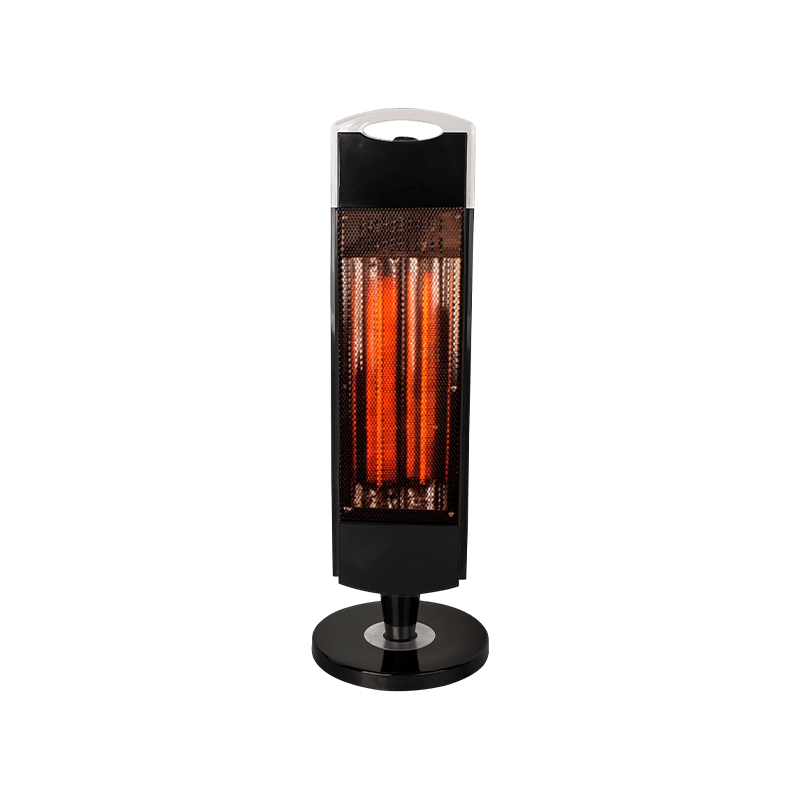
Ceramic fan heaters are better for warming the air in a large room because the fan circulates the heat. Infrared heaters only warm objects and people in their direct line of sight; they do not warm the air itself. For a living room where people are moving around, a ceramic fan heater is much more effective.
Does a higher fan speed mean more heat?
No. The heat output (wattage) remains the same regardless of the fan speed. A higher fan speed simply moves the air faster, which can help distribute heat more quickly in a large room, but it might feel like a “cool breeze” if you are sitting too close to it because of the wind-chill effect.



 English
 中文简体
中文简体