


 English
 中文简体
Introduction to Portable Industrial Air Coolers As temperatures rise, keeping large spaces cool and ...
READ MORE
Best Portable Heaters for the Home: A Practical Guide from the Factory Floor
Content
- 1 What "Best" Actually Means in a Portable Home Heater
- 2 The Six Main Types of Portable Home Heaters Compared
- 3 Matching Wattage to Room Size (and Why 2 kW Is Not Always Better)
- 4 Radiant or Convection? Two Ways to Feel Warm
- 5 Safety Features Worth Insisting On
- 6 What It Actually Costs to Run
- 7 Five Steps to Choosing, in the Order That Saves the Most Time
- 8 Three Home Heaters We Would Point a Friend Toward
- 9 Small Mistakes That Make a Good Heater Feel Disappointing
- 10 A Last Thought Before You Buy
- 11 Frequently Asked Questions
- 11.1 Is a fan heater or an oil-filled radiator better for a bedroom?
- 11.2 How many watts do I need for a 15 square metre room?
- 11.3 Are portable heaters expensive to run?
- 11.4 Can I use a portable heater in a bathroom?
- 11.5 Do I really need a thermostat on a portable heater?
- 11.6 Are infrared heaters more efficient than fan heaters?
- 11.7 How long should a portable heater last?
- 11.8 What is the best heater for a large open plan room?
Most people start shopping for a portable heater the same way. The first cold snap arrives, the central heating cannot quite reach the back bedroom, and suddenly every product page looks identical: 2,000 watts here, three heat settings there, and a photograph of a cheerful living room that tells you nothing about whether the thing will keep you awake at night.
We have been building small appliances in Cixi, Ningbo, a city that likes to call itself China's home appliance capital, since 2007, and heaters are one of the categories we know best. The honest version is this: there is no single best portable heater for the home. There is only the best heater for your room, your noise tolerance and the way your household actually lives in winter.
So this guide is written from that angle. We will walk through the main heater types, how much power a room really needs, which safety features are worth paying for, and roughly what each option costs to run. No brand cheerleading, no pressure, just the questions we would ask if you were standing in our showroom.
2007 The year we began making and exporting small household appliances
6 Heater families in our own line-up, from fan heaters to oil-filled radiators
2,000 W The practical ceiling for a standard household socket in most of Europe
What "Best" Actually Means in a Portable Home Heater
Review pages tend to rank heaters on raw output, but output is the easiest thing to get right and the least likely to make you happy. A 2 kW fan heater and a 2 kW oil-filled radiator can be equally powerful and still feel like completely different products in a bedroom at eleven o'clock at night.
When we talk to buyers, the same six questions come up again and again. It is worth ranking them for yourself before you look at a single specification sheet.
1. Wattage matched to the room
Too much power in a small room means the thermostat clicks on and off constantly and the air turns dry and stuffy. Too little means the heater runs flat out and never quite reaches the temperature you wanted.
2. Sprint or marathon
Some heaters are sprinters that warm a room in three minutes. Others are marathon runners that hold a steady, gentle temperature for hours. Neither is better; they suit different moments of the day.
3. Noise
A fan heater in a hallway is background hum. The same heater beside your pillow is a problem. If the heater is going to run while you sleep, silence becomes the single most valuable feature on the list.
4. Safety and placement
The best heater is the one that can stand safely exactly where the cold is. That usually means a stable base, a tip-over cut-off, an overheat cut-out and a cord that reaches the socket without an extension lead.
5. Running cost
Wattage multiplied by hours multiplied by your electricity tariff. A thermostat and an eco mode matter far more to the final bill than the headline wattage printed on the box.
6. Footprint and storage
Ask yourself where the heater lives in July. Slim panel heaters and compact fan heaters tuck behind a wardrobe; a large radiator needs a corner of its own all year round.
Rank those six for your own home and the shortlist usually shrinks to two or three types within a few minutes. Everything else is detail.
The Six Main Types of Portable Home Heaters Compared
Almost every portable heater sold for domestic use falls into one of six groups. Two of them are radiant, which means they warm people and surfaces directly. The other four work mainly by convection, warming the air and letting it circulate around the room.
| Heater type | How it delivers warmth | Warms up in | Noise | Works best for |
|---|---|---|---|---|
| Fan heater | Blows air across a heated element | Seconds | Noticeable | Quick top-ups in a living room or study |
| Ceramic PTC fan heater | Same principle, with a self-regulating ceramic element | Seconds | Moderate | Desks, bedrooms and small rooms |
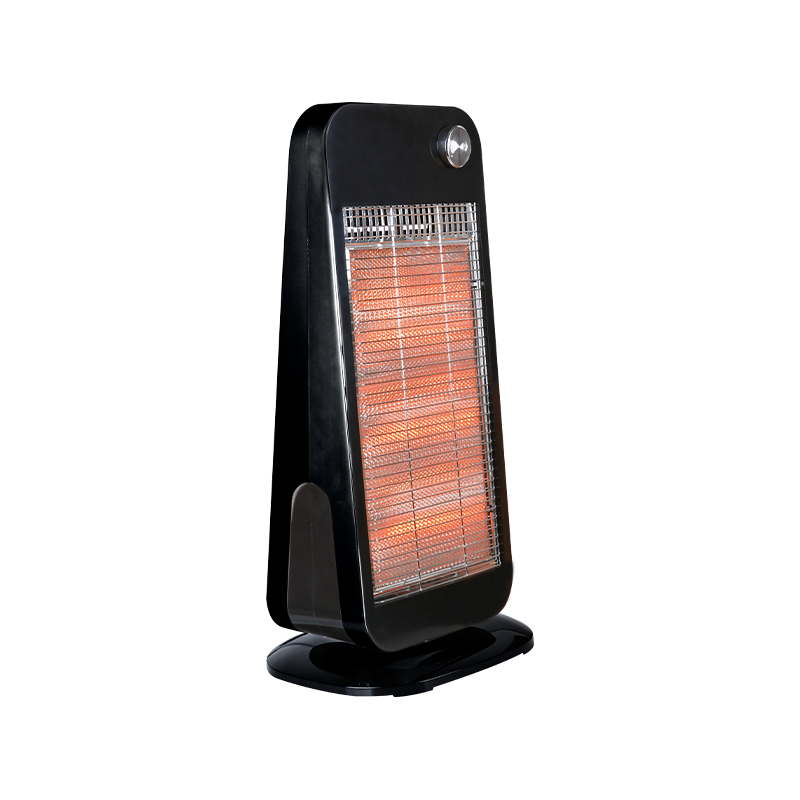
| Halogen or carbon infrared | Radiant beam warms people and objects | Instantly | Silent without a fan | Spot warmth, bathrooms, cold corners |
| Quartz tube heater | Radiant glow from quartz tubes | Instantly | Silent | Directed warmth in small rooms |
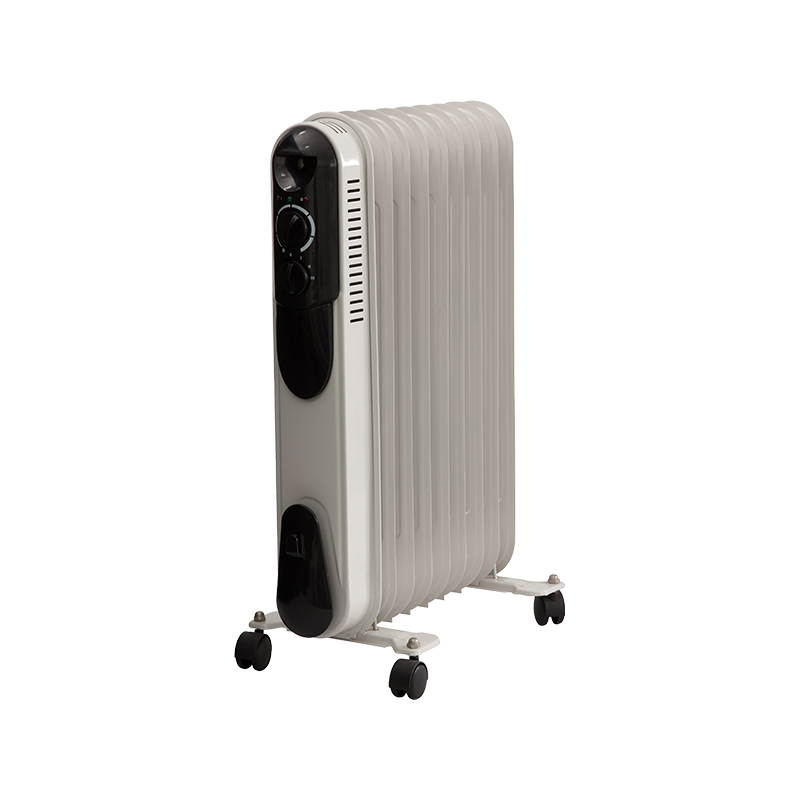
| Oil-filled radiator | Heats oil, then radiates and convects slowly | 10 to 20 minutes | Silent | Bedrooms and all-evening comfort |
| Mica panel heater | Flat element heating a slim panel | 5 to 10 minutes | Silent | Narrow spaces beside a wall or desk |
The pattern is fairly consistent. Fan heaters are the most flexible and the least expensive to manufacture, which is why they dominate the entry level of the market. Ceramic versions add a gentler, self-regulating element that suits small rooms and long sessions at a desk. Infrared heaters feel instant because they warm you rather than the air, but the moment you step out of the beam the sensation disappears.
Oil-filled radiators sit at the opposite end of the scale. They are slow, heavy and completely silent, and once the oil is hot they keep releasing warmth long after the element switches off. For anyone who reads in bed or works from home all day, that steadiness is usually worth the wait.
Matching Wattage to Room Size (and Why 2 kW Is Not Always Better)
The traditional rule of thumb is roughly 100 watts per square metre in a reasonably insulated room with a standard ceiling height. That is a starting point, not a law. Ceiling height, glazing, whether the room sits above a garage, and how well the walls are insulated all shift the number considerably.
Two kilowatts is the ceiling for a normal domestic socket in most European homes, and it is also where most manufacturers stop. Buying a 2 kW heater for a nine square metre box room does not heat it twice as fast; it simply forces the thermostat to cycle more often, which is harder on the components and less comfortable for you.
The other half of the equation is air movement. A single 2 kW unit in a 30 square metre open plan space will create a warm bubble around itself and leave the far corner cold, no matter how long it runs. Two smaller heaters placed at opposite ends, or one heater combined with a ceiling fan on its winter setting, will always distribute warmth more evenly than one large unit in a corner.
Radiant or Convection? Two Ways to Feel Warm
This is the decision that shapes everything else, and it comes down to a simple question: do you want to feel warm in the next thirty seconds, or do you want the whole room to be warm in half an hour?
Radiant warmth: halogen, carbon and quartz
Infrared heaters send energy directly to whatever is in front of them, including you. The air around you may still be cold, but your skin feels warm almost immediately.
- Feels instant, even in a cold room
- Silent on fan-free models
- Excellent for spot heating and short sessions
- Less effective for warming a whole room evenly
- You need to stay within the beam to feel the benefit
Convection warmth: fan, ceramic, oil-filled and panel
Convection heaters warm the air, which then moves around the room. The effect takes longer to arrive but it stays with you when you move around.
- Warms the whole space, not just one spot
- Comfortable for long sessions and background heat
- Oil-filled and panel models are completely silent
- Slower to reach temperature
- Fan models add a small amount of noise
Plenty of households end up with one of each, which is not as extravagant as it sounds. A radiant heater in the bathroom for the ten minutes around a shower, and a quiet convection heater in the bedroom for the evening, covers both needs without either unit being oversized.
If you lean towards the slow and steady approach, we wrote a longer piece on high-efficiency, low-noise oil-filled radiators that goes into more depth on how the oil circuit and thermostat interact. For the radiant side, our own quartz tube heaters show how simple that construction really is.
Safety Features Worth Insisting On
Portable heaters are one of the few household appliances that combine high power, high surface temperature and a plug that people move from room to room. That combination deserves a little respect, and a few features are genuinely non-negotiable.
Must have
Tip-over cut-off
A switch that kills the power the moment the unit tilts past a certain angle. It is the single most important safety device on a portable heater and it costs very little to include.
Must have
Overheat protection
A thermal cut-out that trips if the air intake is blocked by curtains, a blanket or a pile of laundry. Test it by covering the intake briefly in a safe, supervised way, or simply trust a certified model.
Bathrooms
A proper IP rating
If a heater goes anywhere near water, look for an IP rating such as IP23 or IP24. Never place any portable heater within reach of a bath or shower, regardless of its rating.
Comfort
A real thermostat
An adjustable thermostat turns a constant 2 kW draw into an intermittent one, which is better for your bill and much better for the room. An eco mode simply caps the output once the target is reached.
Practical
Stable base and cool surfaces
A wide footprint, non-slip feet and a cool-touch housing around the controls. If the heater wobbles when you touch it, it is in the wrong place or the wrong model.
Installation
Cord and socket discipline
Plug directly into a wall socket wherever possible. A coiled extension lead carrying 2 kW for hours is one of the most common causes of overheating at the plug.
Certification matters too. A CE or equivalent mark, a properly rated plug and a cord that does not warm up in your hand are all reasonable expectations. These are the details that separate a heater designed for a long life from one assembled to hit a price point.
What It Actually Costs to Run
Running cost is the part of the conversation nobody enjoys, but it is also where the biggest differences between heater types show up. The calculation is simple: power in kilowatts multiplied by hours of use multiplied by your electricity tariff. What makes it interesting is how often the heater is actually drawing full power.
| Heater type | Typical power | Energy per hour at full output | Energy per hour with thermostat cycling | Best suited to |
|---|---|---|---|---|
| Fan heater | 2,000 W | 2.0 kWh | About 1.0 to 1.4 kWh | Short bursts of heat |
| Ceramic PTC heater | 1,500 W | 1.5 kWh | About 0.8 to 1.1 kWh | Desks and small rooms |
| Carbon infrared | 1,200 W | 1.2 kWh | About 0.6 to 0.9 kWh | Spot warmth in short sessions |
| Quartz heater | 800 W | 0.8 kWh | About 0.4 to 0.6 kWh | Directed warmth, low demand |
| Oil-filled radiator | 2,000 W | 2.0 kWh | About 0.8 to 1.2 kWh | Long, even sessions |
| Mica panel heater | 1,000 W | 1.0 kWh | About 0.5 to 0.8 kWh | Background heat in slim spaces |
The numbers explain why a thermostat is worth more than a lower wattage. A 2 kW radiator that runs at half duty over four hours uses roughly the same energy as a 1 kW heater running continuously, but it delivers a much more even temperature while it does so.
There is also a strategic point that is easy to miss. Heating one occupied room with a portable heater for a few hours in the evening is often cheaper than running a whole house heating system for the same period. The economics only fall apart when a portable heater is asked to do the job of a central system across several rooms at once.
Five Steps to Choosing, in the Order That Saves the Most Time
If you would rather not read another specification table, this is the sequence we suggest to anyone asking for advice.
Step 1: Measure the room, not the house
Write down the floor area of the single room you most want to heat. That number, not the size of your home, decides the wattage you need.
Step 2: Decide how you want to feel warm
Spot warmth for short bursts points to infrared. A comfortable room for hours points to convection, and usually to a quiet oil-filled or panel model.
Step 3: Set your noise limit
If the heater runs while you sleep, work or watch television, only silent models should stay on the list. This single filter removes most fan heaters immediately.
Step 4: Check where it will stand
Look at the actual floor space, the distance to a wall socket and whether the intake vents would be blocked. Safety features are only useful if the placement allows them to work.
Step 5: Sweat the small details
Thermostat, timer, remote control, carry handle, cable length, warranty and the availability of spare parts. These are the things that decide whether you still like the heater in three winters' time.
Three Home Heaters We Would Point a Friend Toward
We build a lot of heaters, so it would be strange to pretend we have no opinion at all. These three cover the situations we hear about most often, and each one solves a different everyday problem without asking you to spend a fortune.
A fan heater for the living room
The FH8012004 is a straightforward portable fan heater with an adjustable thermostat and two heat settings. It warms a normal living room within a few minutes, which is exactly what you want on a cold evening while the central heating is still waking up. It is not silent and it is not meant to be: fan heaters move air, and moving air makes a little noise.
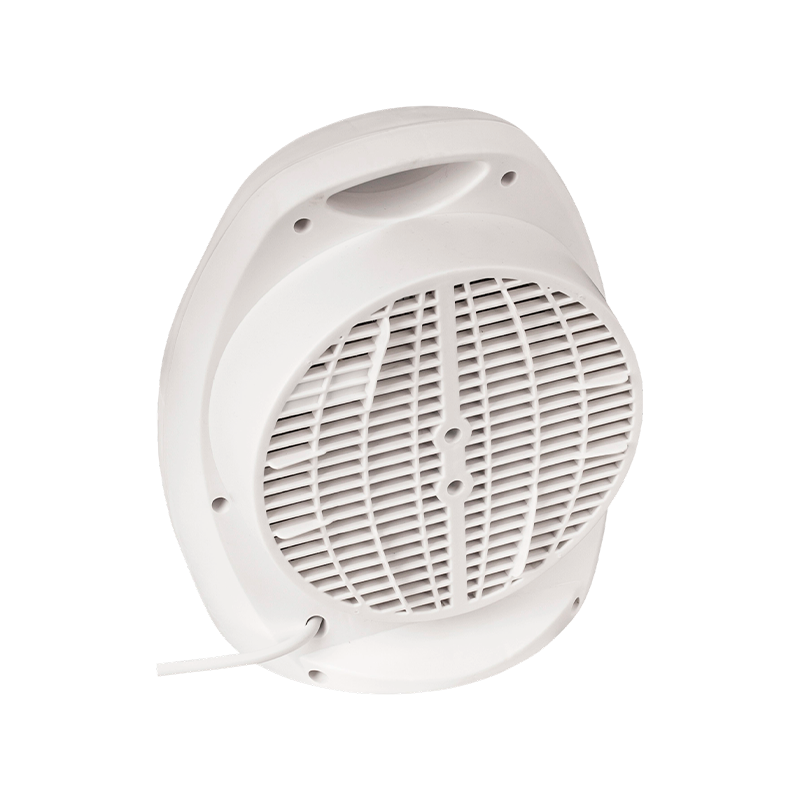 FH8012004 Portable Fan Heater with Adjustable ThermostatA practical fan heater with 1000W/2000W settings, cool-blow mode and overheat protection for quick, flexible room warmth.View Product →
A ceramic heater for a desk or small room
The PTC05 is the compact option. A ceramic element regulates itself as it heats, so the unit holds a steadier temperature and draws less power once it reaches the set point. It suits a home office, a study or a small bedroom where you want warmth close by rather than a whole house at once.
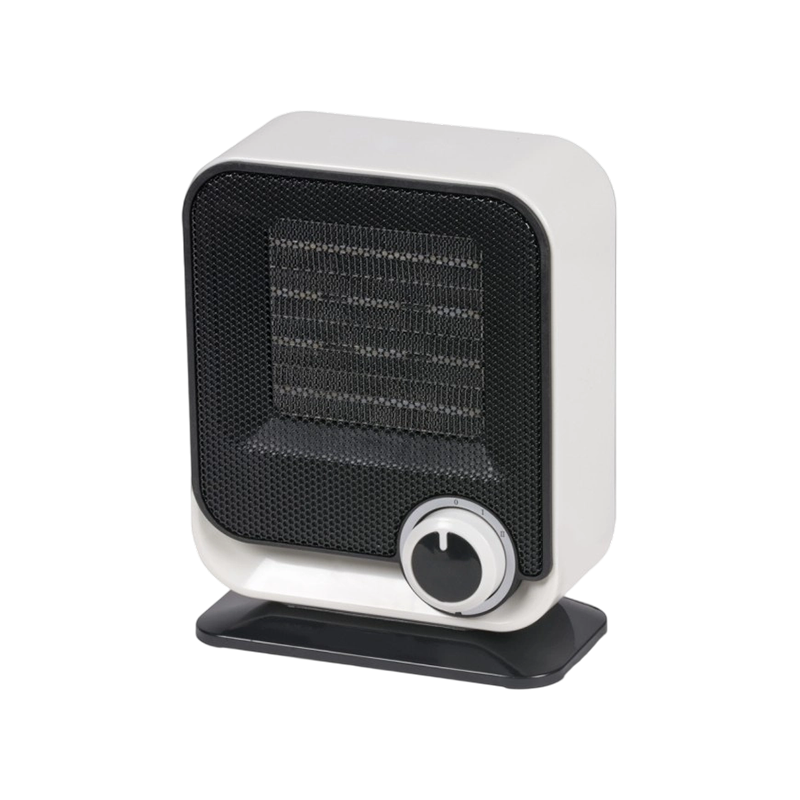 PTC05 Portable Ceramic Fan HeaterA compact 1500W ceramic fan heater with 750W/1500W settings, oscillation and tip-over safety for targeted warmth in small rooms.View Product →
An oil-filled radiator for the bedroom
The NYKTF is the quiet one. Because the heat is stored in oil and released slowly, there is no fan and no click of a heating element every few seconds. It takes ten to twenty minutes to get going, but once it does, the room stays comfortable for the rest of the evening, and you can sleep next to it without noticing it is there.
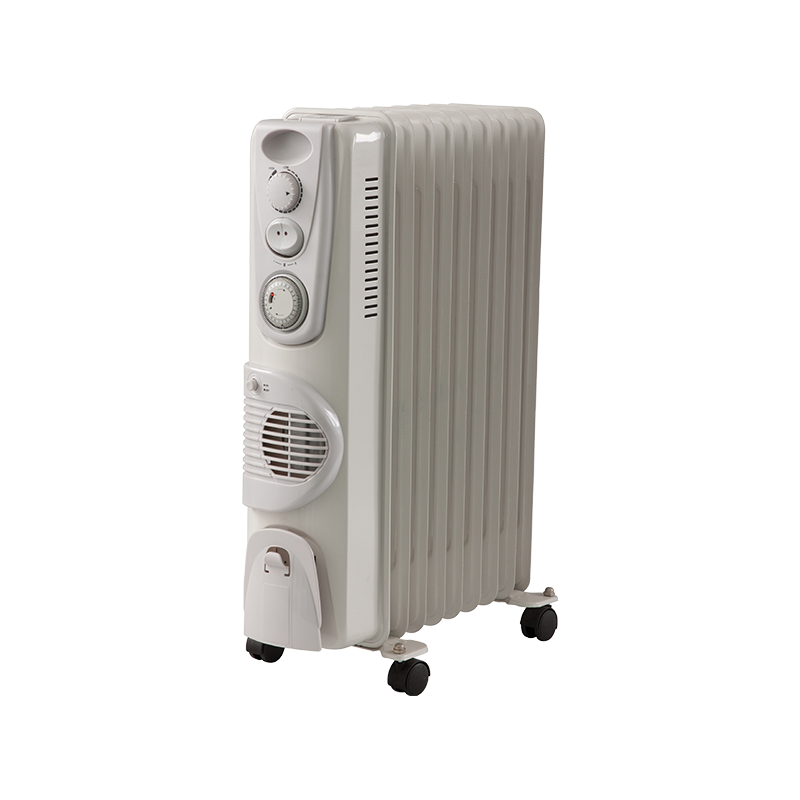 NYKTF Oil-Filled Radiator with Timer and FanA quiet oil-filled radiator with three heat settings, adjustable thermostat, timer, 400W fan heater and triple overheat protection.View Product →
Small Mistakes That Make a Good Heater Feel Disappointing
We hear these complaints often, and in most cases the heater is not the problem. The setup is.
Placing it against a wall or curtain
Blocking the air intake starves the element of airflow. The heater either cycles constantly or, on a bad day, trips its thermal cut-out. Leave a clear gap around every side.
Running it in a room with the door wide open
A portable heater warms one room. If that room is open to a cold hallway and a stairwell, most of the heat leaves before you feel it.
Expecting infrared to heat the air
Infrared warms what it points at. If you want the whole room warm, a radiant heater will always feel like it is underperforming, because it is doing a different job.
Setting the thermostat to maximum
Turning the dial to full does not make the room heat faster, it just removes the point at which the heater switches off. Set the temperature you actually want and let the thermostat work.
Using an extension lead on a reel
High power and coiled cable do not mix well. If you must use an extension lead, uncoil it fully and check its rating, or better still, plug into the wall.
Never cleaning the intake
Dust on the intake grille reduces airflow and makes the heater work harder. A vacuum brush once a season is usually all it takes, and it noticeably extends the life of the unit.
A Last Thought Before You Buy
The best portable heater for your home is almost never the most powerful one, and it is rarely the one with the longest feature list. It is the one that matches your room size, that you can stand where the cold actually is, and that you can live with for an entire winter without resenting the noise, the running cost or the space it takes up.
Buy for the room you have, not the room you wish you had. Do that and a modest heater will outperform an expensive one every single evening.
Frequently Asked Questions
Is a fan heater or an oil-filled radiator better for a bedroom?
For sleeping, an oil-filled radiator or a mica panel heater is almost always the better choice because both are silent and hold a steady temperature. A fan heater warms the room faster but the fan noise is hard to ignore at night.
How many watts do I need for a 15 square metre room?
As a general guide, between 1,000 and 1,500 watts is enough for a normally insulated room of that size with a standard ceiling. Poor insulation or a large window will push you towards the upper end of that range.
Are portable heaters expensive to run?
At full output, a 2 kW heater uses 2 kWh for every hour it runs, so the cost depends entirely on your local tariff. In practice, a thermostat usually keeps the heater at part duty, and heating one occupied room is often cheaper than running a whole-house system.
Can I use a portable heater in a bathroom?
Only a model with an appropriate IP rating, such as IP23 or IP24, and never within reach of a bath, shower or basin. If in doubt, choose a fixed bathroom heater instead and keep portable units in dry rooms.
Do I really need a thermostat on a portable heater?
Yes, if you want reasonable running costs and a stable room temperature. A thermostat converts a constant high draw into an intermittent one, which is gentler on the components and much easier on your bill.
Are infrared heaters more efficient than fan heaters?
They are not more efficient in the physics sense, since both convert electricity to heat almost completely. Infrared simply feels more effective because it warms you directly rather than the air around you, which makes it ideal for short sessions and spot heating.
How long should a portable heater last?
With basic care, several winters is a reasonable expectation. Keep the intake vents clean, store the unit somewhere dry during the summer, avoid running it at maximum output continuously, and check that spare parts such as motors are still available for the model you choose.
What is the best heater for a large open plan room?
One 2 kW unit rarely manages a large open space on its own. Two smaller heaters placed at opposite ends of the room, or one heater combined with gentle air circulation from a ceiling or tower fan, will distribute warmth far more evenly.
PREV:No previous article
NEXT:Best Portable Heaters for Bathrooms: A Practical Buying Guide for 2026
Interested in cooperation or have questions?
News
-
-
An electric fan heater is a popular device used to provide quick and efficient warmth in smaller spa...
READ MORE -
1. Exploring Fan Heaters: Efficient Heating Solutions The Basic Definition and Working Principle of ...
READ MORE -
Introduction to Tea Bar Machines What is a Tea Bar Machine? A tea bar machine represents a profound ...
READ MORE
- Add:
No. 1408, Guanfu Road, Fuhai Town, Cixi City, Ningbo City, Zhejiang Province, China. - Email:
sales@fsdomy.com - Tel:
0086-574-63567602 - Phone:
+86 13805816547
-
Get In Touch
-
Quick Links
Home Products About Us FAQ News Contact -
product Center
Electric Heater Water Dispenser Air Fan & Cooling Spare Part -
NEWS & INSIGHTS
Company News Instury News -
Follow
