


 English
 中文简体
Introduction to Portable Industrial Air Coolers As temperatures rise, keeping large spaces cool and ...
READ MORE
Choosing the Best Heater for a Two Car Garage: Sizing, Types, and Safety
Content
- 1 Why a Two-Car Garage Is Harder to Heat Than a Living Room
- 2 How Much Heating Power Does a Two-Car Garage Need?
- 3 Which Heater Type Suits a Two-Car Garage?
- 4 Three Electric Heaters That Fit a Two-Car Garage
- 5 Safety and Certification Details Worth Checking
- 6 Getting More Heat from Less Power
- 7 Frequently Asked Questions
If your garage doubles as a workshop, a gym, or simply the place where two cars sleep through the winter, you already know the frustration. The rest of the house is comfortable, and the garage is still cold. A two-car garage is a big, leaky, unheated box sitting on a concrete slab, and that combination makes it one of the hardest spaces in a home to warm with a plug-in heater.
We have been building electric heaters in Cixi, Ningbo since 2007, and every autumn the same questions arrive: how much power is enough, and which type of heater actually works in a space that size? This guide covers the numbers that matter, the types worth considering, and the details that decide whether a two-car garage becomes usable in January or just slightly less freezing.
Why a Two-Car Garage Is Harder to Heat Than a Living Room
A typical two-car garage measures around 20 by 22 feet, roughly 440 square feet, with a nine-foot ceiling. That is about 4,000 cubic feet of air, and very little of it is protected the way the rest of the house is. Four things work against you:
- The slab. Concrete floors stay cold and pull heat out of the air and out of anything touching them, so the heater has to warm the floor before the room feels comfortable.
- The door. Even a well-fitted sectional door is a thin barrier with gaps at the sides and bottom, and wind-driven air exchange replaces warm air quickly.
- Missing insulation. Many garages have bare walls and an uninsulated ceiling, often beneath a cold room or attic.
- Intermittent use. Doors open, cars come in wet with snow, and heat disappears fast. Heaters that warm air quickly often suit garages better than slow, steady background units.
How Much Heating Power Does a Two-Car Garage Need?
There is no single answer, because insulation and climate change the math dramatically. In a moderate climate with outside temperatures around 30 to 40 degrees Fahrenheit, a reasonable starting point is watts per square foot of floor area:
- Well-insulated garage with a sealed door: about 10 watts per square foot.
- Partially insulated or older garage: about 15 to 20 watts per square foot.
- Bare walls, uninsulated ceiling, drafty door: 25 watts per square foot or more.
Applied to real two-car garage dimensions, that produces the following rough targets.
| Garage Size | Floor Area | Well Insulated | Poorly Insulated |
|---|---|---|---|
| Compact two-car (18 x 20 ft) | 360 sq ft | 3,600 W / 12,300 BTU/h | 9,000 W / 30,700 BTU/h |
| Standard two-car (20 x 22 ft) | 440 sq ft | 4,400 W / 15,000 BTU/h | 11,000 W / 37,500 BTU/h |
| Large two-car (24 x 24 ft) | 576 sq ft | 5,800 W / 19,800 BTU/h | 14,400 W / 49,100 BTU/h |
This is where the plan usually meets the electrical panel. A standard 120-volt, 15-amp household circuit delivers about 1,800 watts, and continuous loads should stay near 80 percent of that, so roughly 1,440 watts of usable heating. Two or three 1,500-watt portables on one circuit will trip the breaker, and running them on long extension cords is a genuine fire risk. In practice:
- For spot warmth at a workbench, one 1,500-watt heater on its own circuit is enough.
- For whole-garage comfort, plan on 240 volts: a 240 V, 30 A circuit supports roughly 5,700 watts.
- Where 240 volts is unavailable, use separate 120-volt circuits on different breakers and keep cords short and heavy gauge.
Which Heater Type Suits a Two-Car Garage?
Electric Fan Heaters
Forced-air fan heaters move warm air quickly, which matches the stop-start rhythm of garage use. They take the edge off in minutes, and most models include a thermostat and several power settings. The trade-off is noise, and the warmth fades soon after you switch them off.
Oil-Filled Radiators and Mica Panel Heaters
Oil-filled radiators heat slowly, hold their temperature after shutdown, and run in near silence because no fan is pushing dust around. That suits a garage used as an office, gym, or spare room where a steady background temperature matters more than a blast of hot air. For the engineering detail, we wrote about how modern oil-filled radiators manage heat output and noise.
Infrared Carbon and Quartz Heaters
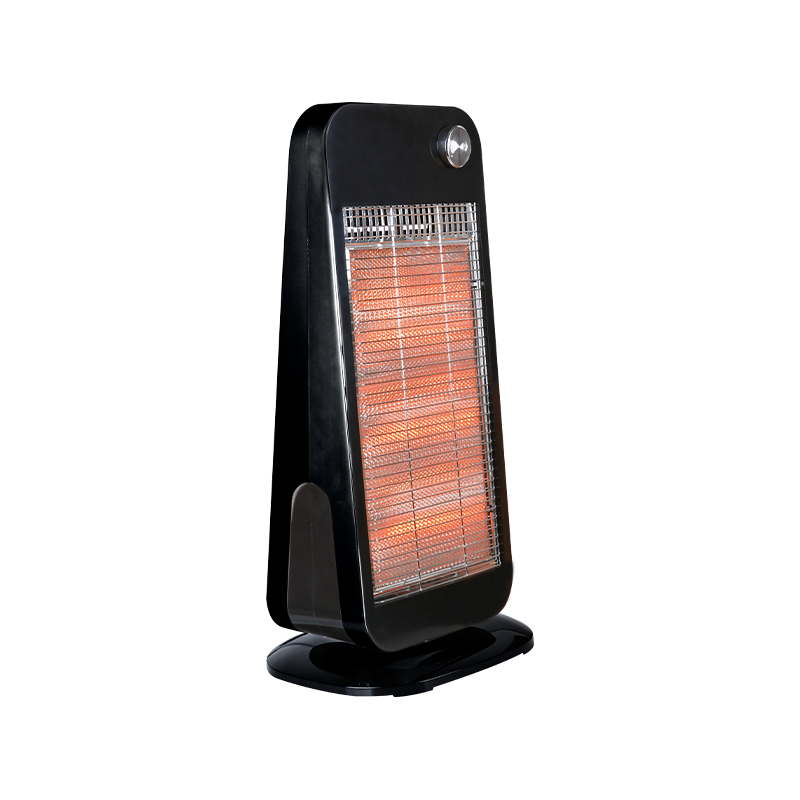
These warm objects and people rather than the air, so they excel at a fixed work area such as a bench, a lifting bay, or a doorway where you stand still. They start producing heat within seconds, but they supplement rather than solve whole-space heating.
Ceramic PTC Heaters
Compact, quick to warm a small area, and often cool to the touch on the housing, ceramic PTC units are ideal for a single bay or a personal workspace. They will not carry 440 square feet on their own.
Fuel-burning options such as propane forced-air heaters deliver enormous output and are popular on construction sites, but in an enclosed garage they produce carbon monoxide and add moisture that condenses on cold tools. If you use one, ventilate properly and install a CO alarm. Electric heaters avoid combustion by-products entirely, which is one reason we build only electric models.
Three Electric Heaters That Fit a Two-Car Garage
Every garage is a little different, so we usually suggest matching the heater to how the space is actually used. Here are three models from our own line that cover the most common two-car garage situations, and you can browse the full electric heater range if you want the wider picture first.
Wall-Mounted Fan Heater for Permanent, Floor-Free Warmth
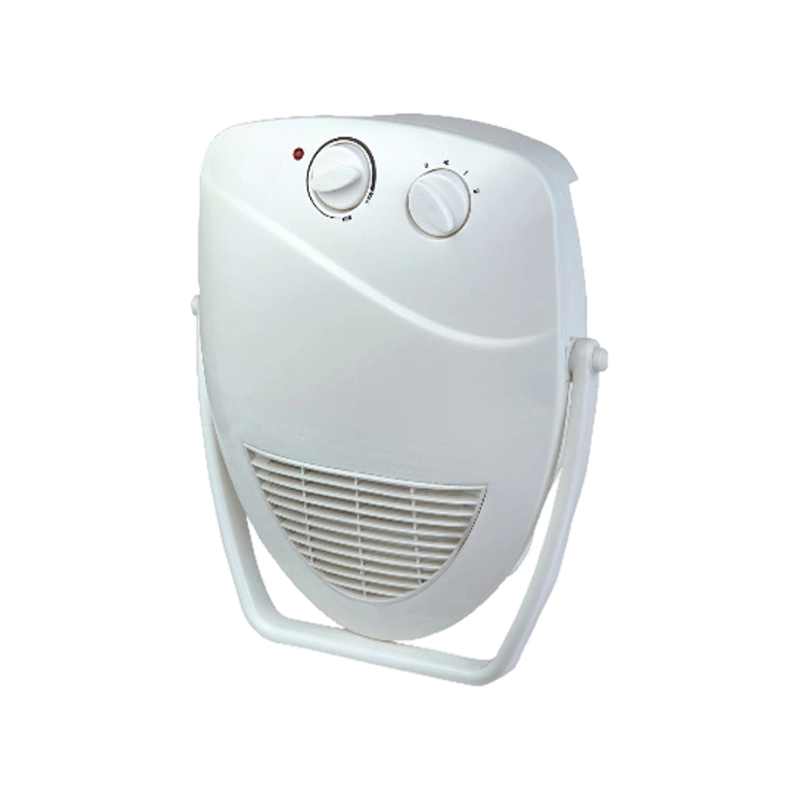 HFH2000/HFH2000T Wall-Mounted Fan Heater with ThermostatWall-mounted 1,000/2,000W fan heater with adjustable thermostat, cool blow, overheat protection, and tower rail; keeps garage floor clear and circulates heat at height.View Product →
The HFH2000/HFH2000T mounts on the wall or ceiling, keeps the floor clear, and uses a thermostat to cycle the element instead of running flat out. Being off the ground, it is less likely to be knocked over or buried under a bicycle or a stack of boxes, and the heat is released at a height where it circulates instead of staying trapped behind a parked car.
Oil-Filled Radiator for Steady, Quiet Background Heat
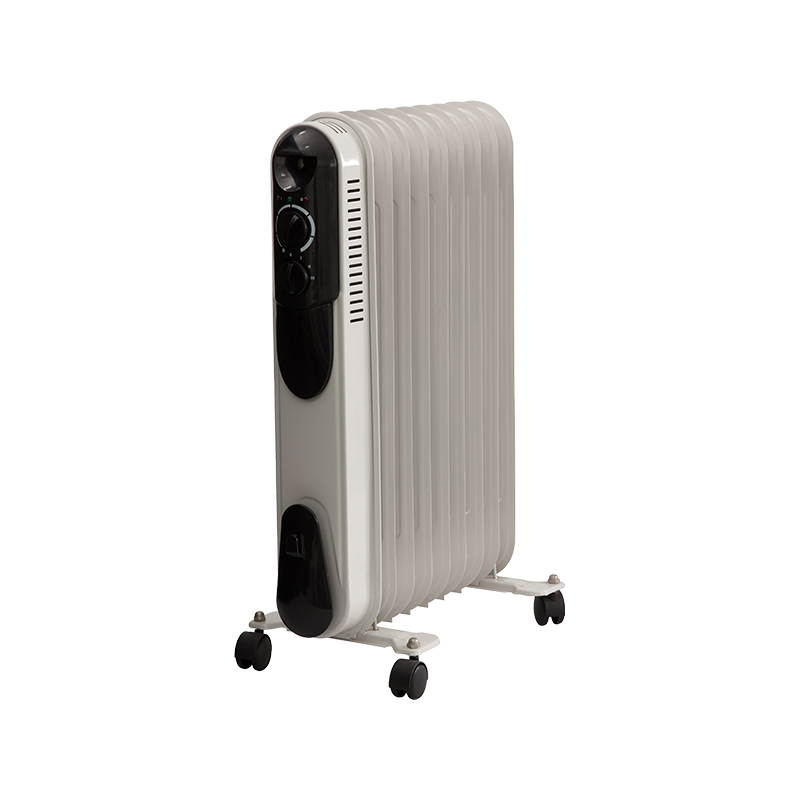
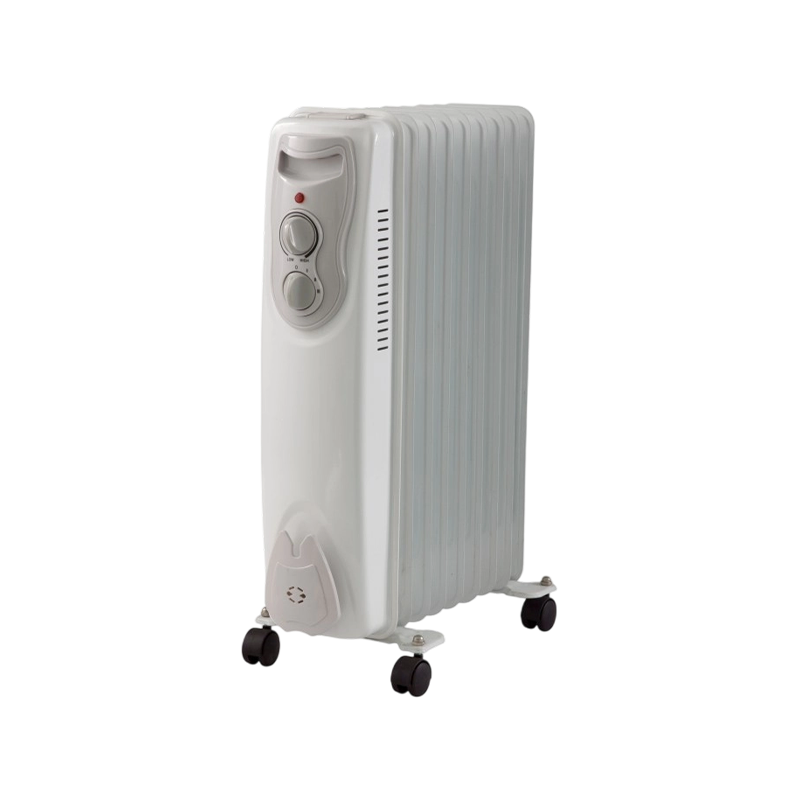 NYC Oil-Filled Radiator for Large-Room HeatingSilent oil-filled radiator with three settings and adjustable thermostat; suited to larger spaces like a two-car garage and keeps releasing warmth after thermostat cycles off.View Product →
The NYC oil-filled radiator is designed for larger rooms, and a standard two-car garage falls squarely into that range. It is silent, has no fan or glowing element to worry about near sawdust and solvents, and keeps releasing heat for a while after the thermostat clicks off, which helps hold a steady overnight temperature without blasting hot air for an hour.
Portable, Energy-Efficient Fan Heater for One Bay
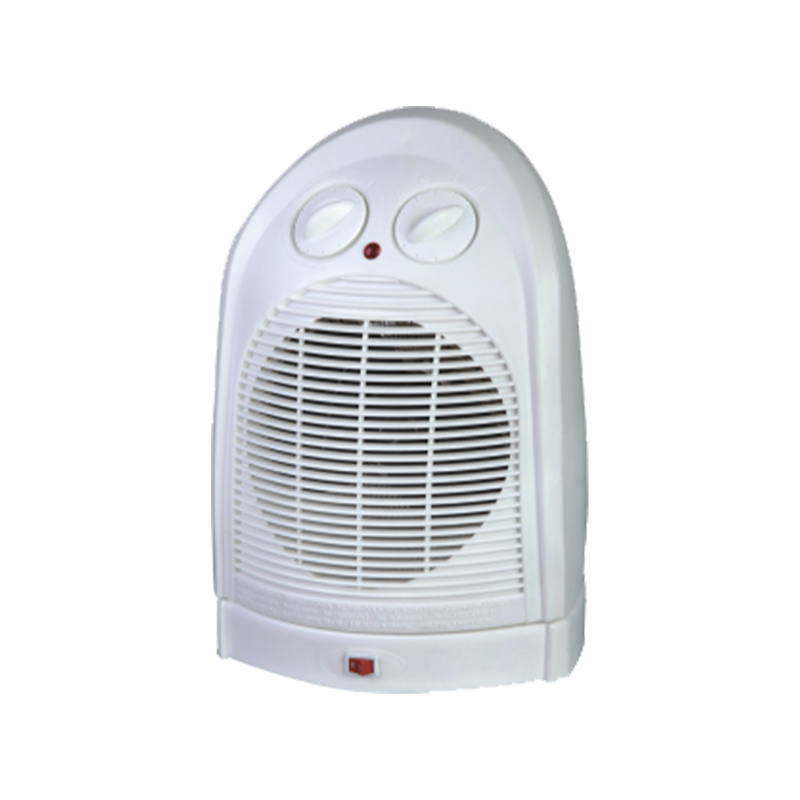 HFH806/HFH806B Portable 2,000W Fan HeaterPortable 1,000/2,000W fan heater with two heat levels, 60-degree oscillation, cool blow, adjustable thermostat, and overheat protection; fits single-bay or workshop spaces.View Product →
The HFH806 is a 2,000-watt fan heater with an energy-efficient design, better suited to a single bay, a workshop corner, or a garage that is already partly insulated. It is light enough to follow you from the bench to the car and back, and it runs from a standard 120-volt circuit as long as nothing else heavy shares that breaker.
Safety and Certification Details Worth Checking
Heaters are one of the few appliances people leave running unattended in a space full of fuel, tools, and dust. A short checklist before you buy:
- Overheat protection and a tip-over switch on any portable unit.
- An adjustable thermostat or at least two power settings, so the heater is not always at full output.
- A splash-resistant rating such as IP23 if the garage is damp or the heater sits near a doorway.
- Recognized certification for your market. Our European-market models carry CE marking, and distributors usually ask about that first.
- A GFCI-protected outlet, and no long extension cords for high-wattage heaters.
- At least three feet of clearance from anything flammable, with nothing placed on top of the unit.
- A carbon monoxide alarm if any fuel-burning equipment is also used in the garage.
Getting More Heat from Less Power
Before buying a bigger heater, it is worth spending one afternoon on the building itself. In our experience these changes often matter more than an extra kilowatt:
- Seal the garage door with a threshold seal and side weatherstripping to cut the worst air exchange.
- Insulate the ceiling first, since warm air rises and an uninsulated ceiling is where most heating money goes.
- Add a foil-faced insulation kit to the door panels themselves.
- Keep the door closed while heating and allow time for the slab to warm up.
- Place the heater where you actually are, not in the middle of the floor plan.
- Use a plug-in thermostat or timer so the space is warm when needed rather than all day.
Frequently Asked Questions
How many watts do I need for a two-car garage?
For a standard 20 by 22 foot garage in a moderate climate, plan on roughly 4,400 watts if it is well insulated, and 8,000 to 11,000 watts if it is not. Poorly insulated garages usually need a 240-volt heater or several units on separate circuits.
Can a single 1,500-watt heater heat a two-car garage?
Not as a primary heat source. It will take the chill off a work area, warm one bay, or help protect pipes in mild weather, but whole-garage comfort needs more output than one 120-volt circuit can safely supply.
Are infrared or fan heaters better for a garage?
Fan heaters and radiators warm the air and suit whole-space comfort. Infrared heaters warm people and objects and suit a fixed work spot. Many garages end up using both: one for general warmth, one for the bench.
Do I need a 240-volt heater for a two-car garage?
If you want the space genuinely comfortable and it is poorly insulated, yes. A 240-volt, 30-amp circuit provides around 5,700 watts, which covers most insulated two-car garages with a single unit. For smaller needs, two separate 120-volt circuits can work.
Heating a two-car garage is mostly a matter of being honest about the space: how big it is, how leaky it is, and how much power you can safely deliver to it. Sort out the ceiling insulation and the door seal first, size the heater to the real numbers, and pick a type that matches how you use the room. Do that, and the garage stops being the coldest room in the house.
If you are specifying heaters for a distribution range, a retail program, or an OEM project and want help matching models to a market, our team is glad to talk through options, including custom logos, voltage variants, and certification requirements for your region.
PREV:No previous article
NEXT:Best Electric Wall Heaters for Large Rooms: Sizing, Safety and Buying Tips
NEXT:Best Electric Wall Heaters for Large Rooms: Sizing, Safety and Buying Tips
Interested in cooperation or have questions?
News
-
-
An electric fan heater is a popular device used to provide quick and efficient warmth in smaller spa...
READ MORE -
1. Exploring Fan Heaters: Efficient Heating Solutions The Basic Definition and Working Principle of ...
READ MORE -
Introduction to Tea Bar Machines What is a Tea Bar Machine? A tea bar machine represents a profound ...
READ MORE
- Add:
No. 1408, Guanfu Road, Fuhai Town, Cixi City, Ningbo City, Zhejiang Province, China. - Email:
sales@fsdomy.com - Tel:
0086-574-63567602 - Phone:
+86 13805816547
-
Get In Touch
-
Quick Links
Home Products About Us FAQ News Contact -
product Center
Electric Heater Water Dispenser Air Fan & Cooling Spare Part -
NEWS & INSIGHTS
Company News Instury News -
Follow
