


 English
 中文简体
中文简体
Introduction to Portable Industrial Air Coolers As temperatures rise, keeping large spaces cool and ...
READ MORE
120V Garage Heater with Thermostat: A Practical Buying Guide for Workshops
When winter temperatures drop below freezing, the garage becomes one of the coldest and least usable spaces in the house. Many homeowners assume the only real solution is a 240V garage heater, which requires a dedicated circuit and a licensed electrician. For most of us, there is a practical alternative. A 120V garage heater with thermostat can plug directly into a standard outlet, yet still keep a small or medium workshop comfortable for extended work sessions. The secret is not just in the wattage—it is in matching the heater to your space, choosing the right technology, and relying on a thermostat to do the heavy lifting.
Why 120V Is Enough for Most Garages
Standard residential garage outlets supply either 15A or 20A at 120 volts. That translates to about 1,800W maximum on a 15A circuit, and about 2,400W on a 20A circuit. For safety, continuous load should stay below 80% of the breaker rating. A 15A circuit can therefore run a 1,440W heater continuously, while a 20A circuit can handle about 1,920W. Professional electricians apply this derating rule to heaters, and it protects the wiring from long-term stress.
Is that enough for a garage? It depends on the winter temperature and the condition of the space. In a typical two-car garage with adequate insulation, a 1,500W forced-air heater can raise the temperature by 10 to 15 degrees Fahrenheit within 20 minutes. That is enough to make a workbench area usable in conditions that would otherwise be uncomfortable. If you work at a bench most of the day, you rarely need to heat the entire garage cavity—you need a localized zone that the heater can maintain. This is exactly why a thermostat becomes your most useful tool.
Wall-mounted fan heaters are especially well suited for garage installations. They keep the floor clear and can be placed near the workbench where you actually need warmth. A factory option such as a wall-mounted fan heater with thermostat fits into a standard 120V/15A outlet without modifications, making it a practical choice for homeowners who want a permanent yet simple setup.
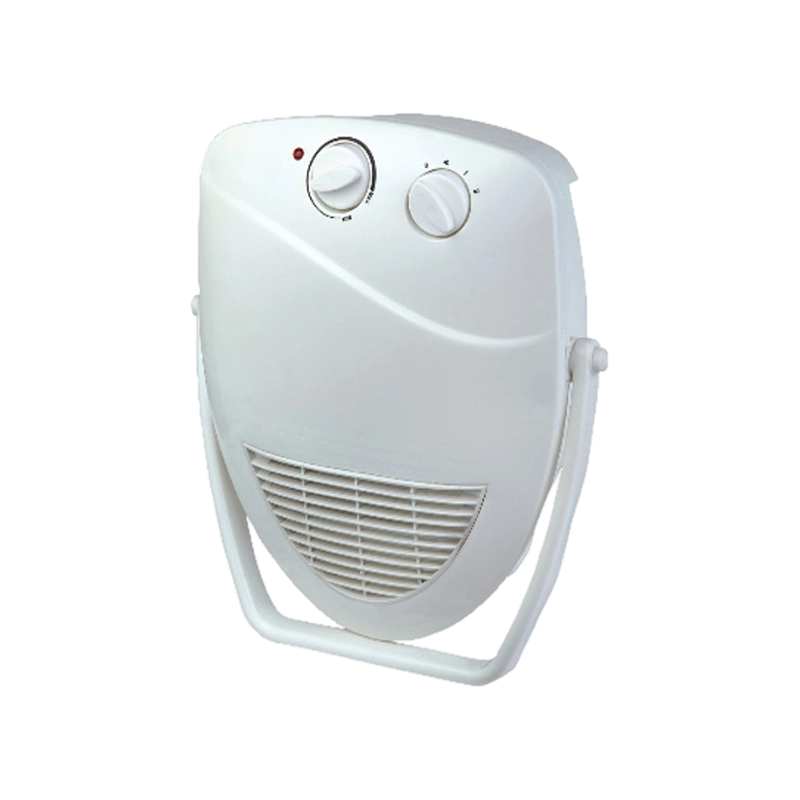 Wall-Mounted Fan Heater with Thermostat for Garage UseThis heater fits a standard 120V/15A outlet and offers 1000W/2000W heat settings plus cool air mode. Its adjustable thermostat maintains desired temperature, while overheat protection ensures safety for workshop use.View Product →
How a Thermostat Makes the Difference
A thermostat changes the way a heater behaves. Without one, the heater runs at full power continuously until you manually turn it off. With a thermostat, the heater cycles: it draws full current when the ambient temperature falls below your set point, then drops to idle or turns off when the target is reached. For a garage, this is not just a convenience—it saves energy.
In many garages, the difference between 55°F and 65°F is the material boundary between uncomfortable and workable. A thermostat holds that boundary. Instead of running perpetually and cycling warm air through a poorly insulated space, the heater lets the temperature sag slightly, then re-heats it when needed. This can reduce runtime by 10% to 30% compared to a single-speed heater left on continuously. For a well-sealed garage, the savings are even more noticeable.
A good thermostat also protects the heater itself from short-cycling. When the temperature sensor is accurate, the heating element does not have to switch on and off as frequently, which reduces wear. This is why heaters with intelligent temperature control are often recommended for cold rooms: they combine cycle efficiency with a stable output. The same principle applies in oil-filled radiators with intelligent temperature control, which use thermostat cycles to maintain a constant room temperature while keeping noise levels low.
Heating Technologies Compared
Not all garage heaters work the same way. Here is how the four main electric heating types stack up for 120V garage applications.
| Heating Type | Warm-Up Speed | Temperature Uniformity | Thermostat Performance | Safety | Best Fit |
|---|---|---|---|---|---|
| Forced-Air Fan Heater | Fast | Good | Excellent | High with overheat protection | Small to medium garages |
| Ceramic PTC Heater | Medium | Very good | Excellent | High with self-regulating element | Workbench zones |
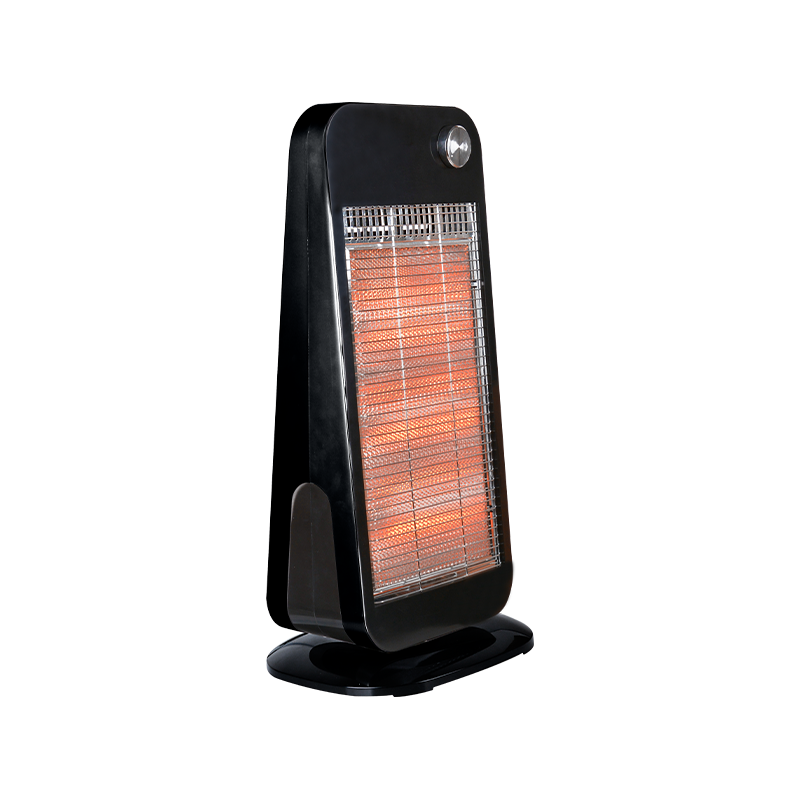
| Quartz / Infrared Heater | Immediate | Localized | Moderate | Medium with tip-over switch | Spot heating |
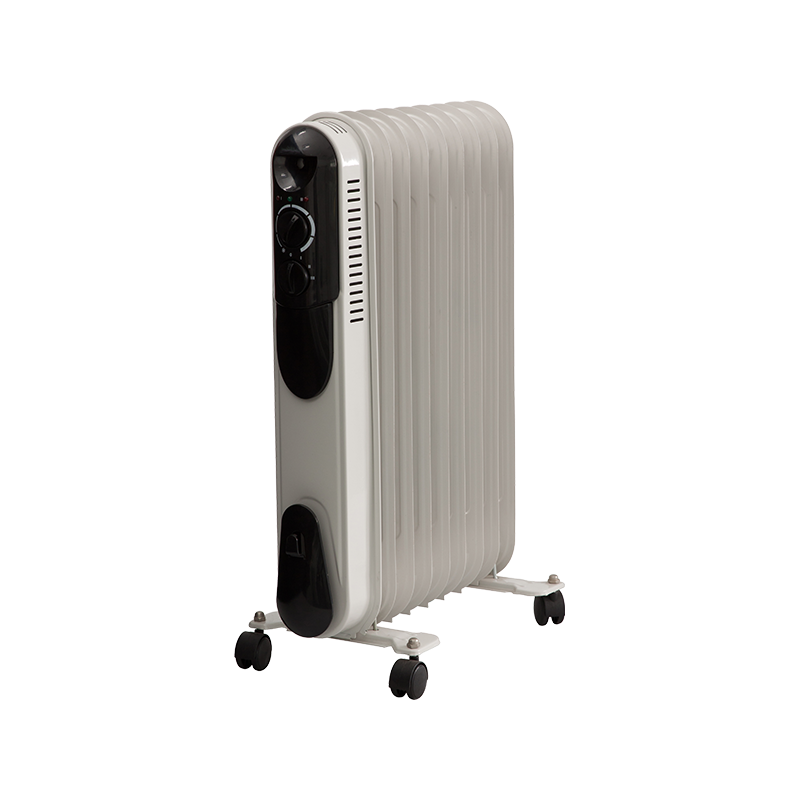
| Oil-Filled Radiator | Slow | Very uniform | Excellent | High with tip-over protection | Long, quiet sessions |
Fan heaters are the dominant choice for garage heating because they move a lot of air in a short time. The heating element warms the intake air, the fan pushes it out, and the air mixes with the cold garage air to distribute heat. This is also the reason most manufacturers equip fan heaters with adjustable thermostats and multiple output stages. If you want to understand the mechanics behind this approach, the article on how electric fan heaters work explains the physics in plain language.
Sizing Your Heater to Your Garage
Heater output is usually measured in watts, but what homeowners often care about is how much temperature rise that output produces. The heat requirement for a garage depends on square footage, ceiling height, insulation, and how cold the climate is in your area. Use this chart as a starting point.
| Garage Dimension | Approx. Area | Recommended Output | Circuit Requirement |
|---|---|---|---|
| 10x12 ft | 120 sq ft | 800-1,000W | 15A |
| 12x18 ft | 216 sq ft | 1,200-1,500W | 15A |
| 16x20 ft | 320 sq ft | 1,500W | 15A |
| 20x20 ft | 400 sq ft | 1,800W | 20A |
These numbers assume reasonably sealed walls and doors. In an uninsulated garage with noticeable drafts, you should upgrade to the next heater size and address air leaks where you can. The goal is not to heat the entire garage to living-room temperatures; it is to raise the floor and air temperature enough to work comfortably. A 1,500W fan heater with thermostat is usually the sweet spot for 120V use because it stays within the safe load for a standard 15A breaker. Models like a low-energy fan heater with thermostat are built for continuous operation, and they respond quickly when the temperature drops.
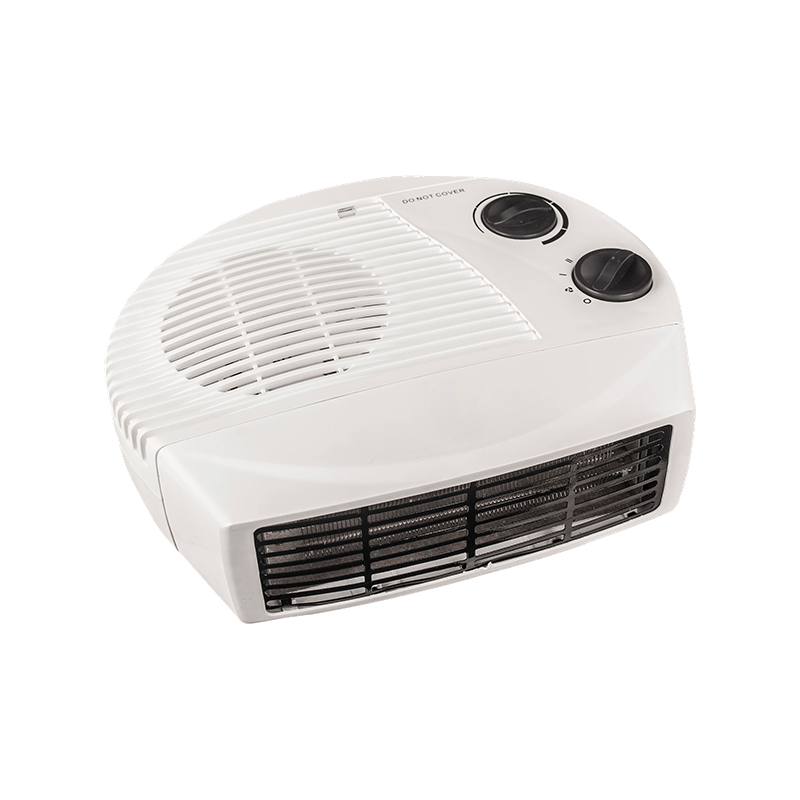 Low-Energy Fan Heater with Thermostat for 120V UseWith 1000W/2000W options and a cool air mode, this heater suits continuous operation. The adjustable thermostat keeps a steady temperature, and overheat protection adds safety, making it a reliable choice for garages.View Product →
Safety Features and Installation
Safety cannot be an afterthought in a garage. Every heater you choose should have at least three protections: an overheat switch, a tip-over switch, and a flame-retardant housing. For a 120V heater, the plug itself should be a grounded three-prong type that matches your outlet. If the unit draws 1,500W or more, avoid extension cords unless they are rated for the load; even then, a direct wall plug is always safer.
Placement matters just as much as the plug. Wall-mounted units should be installed at least six inches above the floor and far from stored paint, solvents, or other flammable materials. Portable heaters should stand on a flat, solid surface—never on a plastic container or a wooden crate. If the garage gets damp, look for models with a water-resistant housing. Forced-air heaters are less sensitive to humidity than radiant heaters, which makes them a safer default for typical residential garages.
Making the Right Purchase
When you shop for a 120V garage heater with thermostat, compare these factors in order:
- Certification and compliance: check that the unit carries recognized safety certifications such as CE for European markets or ETL/UL for North America.
- Voltage and frequency: verify that the model is specified for 120V/60Hz operation, which is the North American standard.
- Power stages: multi-stage heaters give you more control. A low stage can maintain a set temperature, while a high stage warms the space faster when you first arrive.
- Noise level: if you plan to work in the garage for hours, a quiet fan or a low-noise motor matters more than raw power.
- Durability of the enclosure: garage environments see dust and occasional moisture. Look for a housing that can handle that.
As a manufacturer based in China, we produce heaters for customers who sell in North America and Europe, and we supply both large distributors and small brands. If you need a customized model with a specific color, logo, or control layout, the OEM route is worth considering. For workshop use, a compact 2,000W portable fan heater can be a useful supplement when you need extra heat after opening the garage door.
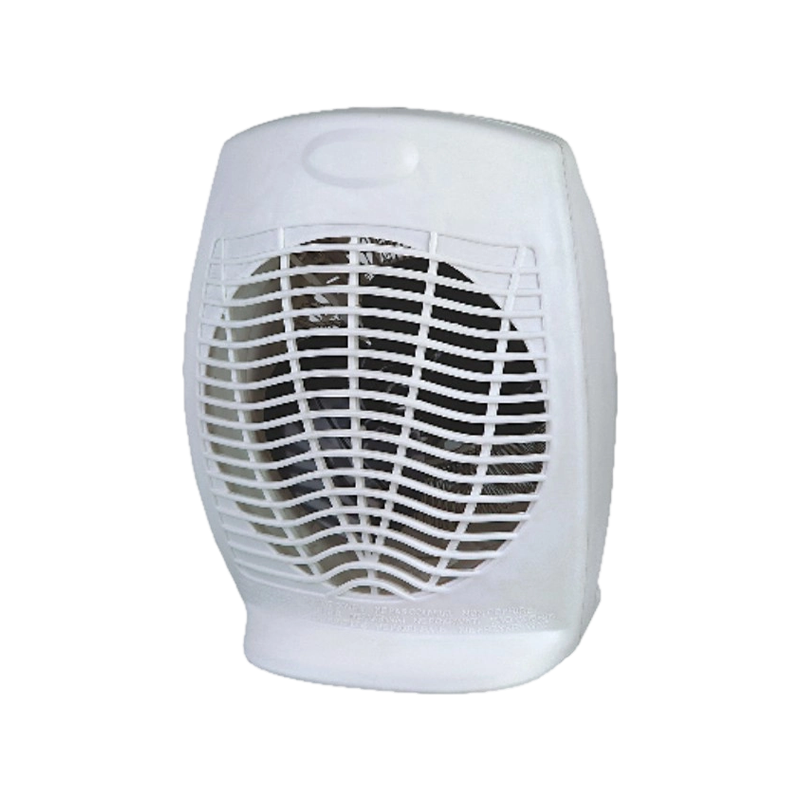 Portable 2000W Fan Heater for Small Room HeatingThis portable fan heater offers 1000W/2000W heat settings and cool air mode. With adjustable thermostat and overheat protection, it provides supplemental warmth for small workshops or rooms when extra heat is needed after opening the door.View Product →
A 120V garage heater with thermostat is not a compromise—it is a sensible, safe, and manageable solution for most workshop spaces. Get the circuit right, match the wattage to the square footage, choose the heating technology that suits your work style, and let the thermostat regulate the temperature. The result is a workspace that stays usable even when the outdoor temperature is on the wrong side of freezing.
PREV:No previous article
NEXT:How to Calculate Heater Size in Watts and BTU: A Practical Room-by-Room Guide
NEXT:How to Calculate Heater Size in Watts and BTU: A Practical Room-by-Room Guide
Interested in cooperation or have questions?
News
-
-
An electric fan heater is a popular device used to provide quick and efficient warmth in smaller spa...
READ MORE -
1. Exploring Fan Heaters: Efficient Heating Solutions The Basic Definition and Working Principle of ...
READ MORE -
Introduction to Tea Bar Machines What is a Tea Bar Machine? A tea bar machine represents a profound ...
READ MORE
- Add:
No. 1408, Guanfu Road, Fuhai Town, Cixi City, Ningbo City, Zhejiang Province, China. - Email:
sales@fsdomy.com - Tel:
0086-574-63567602 - Phone:
+86 13805816547
-
Get In Touch
-
Quick Links
Home Products About Us FAQ News Contact -
product Center
Electric Heater Water Dispenser Air Fan & Cooling Spare Part -
NEWS & INSIGHTS
Company News Instury News -
Follow
