


 English
 中文简体
中文简体
Introduction to Portable Industrial Air Coolers As temperatures rise, keeping large spaces cool and ...
READ MORE
400 Sq Ft Electric Heater: Power Needs, Safety Limits, and Realistic Buying Options
Content
You have a 400-square-foot garage, an unfinished basement, or a spacious workshop that stays cold from November through March. You want one electric heater to manage the whole area, but you also do not want to trip a circuit breaker or run up an enormous energy bill. Here is the short version: a single 1,500-watt plug-in heater will not heat 400 square feet. The practical answer is either a higher-wattage hardwired unit (if your building permits) or two strategically placed portable heaters working together. This article explains the math, the safety limits, the heater types, and the buying decisions that actually matter for a space of this size.
How Much Heat Does a 400 Sq Ft Room Actually Need?
Heating capacity is not a vague “bigger is better” question. For a well-insulated room, a commonly used rule of thumb is 10 watts per square foot. For a 400 sq ft space, that gives 4,000 watts of heating capacity. If the room has average insulation, the number moves up to about 5,000 watts. If you are dealing with an uninsulated garage or a drafty workshop, expect to need 6,000 watts or more.
This is why most residential plug-in heaters struggle. A standard 120-volt household outlet is rated for 15 or 20 amps. At 15 amps, the maximum continuous load is about 1,800 watts, and most manufacturers cap their plug-in models at 1,500 watts to stay safe. That means one heater simply cannot cover the full requirement of a 400 sq ft space.
| Insulation condition | Recommended wattage | Number of 1,500 W heaters |
|---|---|---|
| Good insulation | 4,000 W | 3 heaters running together |
| Average insulation | 5,000 W | 4 heaters, or 2 high-wattage units |
| Poor insulation / garage | 6,000 W or more | 4 heaters plus a fan to circulate air |
The table is a starting point, not a final specification. Ceiling height, window area, air leaks, and the local climate all shift the actual number. If you want to avoid guessing, a simple heat-loss calculation using the room’s dimensions and insulation R-values is more accurate than any generic formula.
Why a Single 1500W Plug-In Heater Usually Falls Short
Many online discussions about “one heater for 400 sq ft” start with the same assumption: buy a 1,500-watt heater and you will be fine. The math already shows that is not true. But the practical consequences go beyond temperature.
When an undersized heater runs continuously, it never reaches the thermostat setpoint. The room stays at 55°F instead of 68°F, and the heating element stays on almost constantly. That means higher energy consumption, more wear on the appliance, and no real comfort improvement. In an uninsulated garage, the same heater may run for hours and still leave the floor and tools feeling cold.
There is also an electrical safety angle. Running a 1,500-watt heater on a 15-amp circuit is already using about 12.5 amps. If the same circuit feeds lights, a refrigerator, or power tools, you can easily exceed 15 amps and trip the breaker. Adding a second heater on the same circuit is not an option. You need separate circuits or a 240-volt hardwired solution.
If you are set on a single appliance, a 240-volt heater rated at 5,000 watts is the more realistic choice for a garage or workshop. However, this requires a dedicated circuit and professional installation, which is why many buyers prefer to use two or more 120-volt portable heaters placed in different parts of the room.
Which Heater Type Is Right for Your Space?
Not all electric heaters deliver heat the same way. For a 400 sq ft space, the type you choose affects comfort, operating cost, and how long you need to run the appliance.
| Type | Heat delivery | Advantages | Limitations |
|---|---|---|---|
| Oil-filled radiator | Radiant plus convection | Quiet, steady, retains heat | Slow warm-up, heavier |
| Fan heater | Forced air | Fast, portable, good for spot heating | Noisy, can stir dust |
| Quartz / halogen | Infrared radiant | Instant, energy-efficient for short use | Very limited coverage, no deep heat |
| Ceramic PTC | Fan-assisted oscillation | Compact, safe, good for desktops | Best for small rooms only |
Oil-Filled Radiators
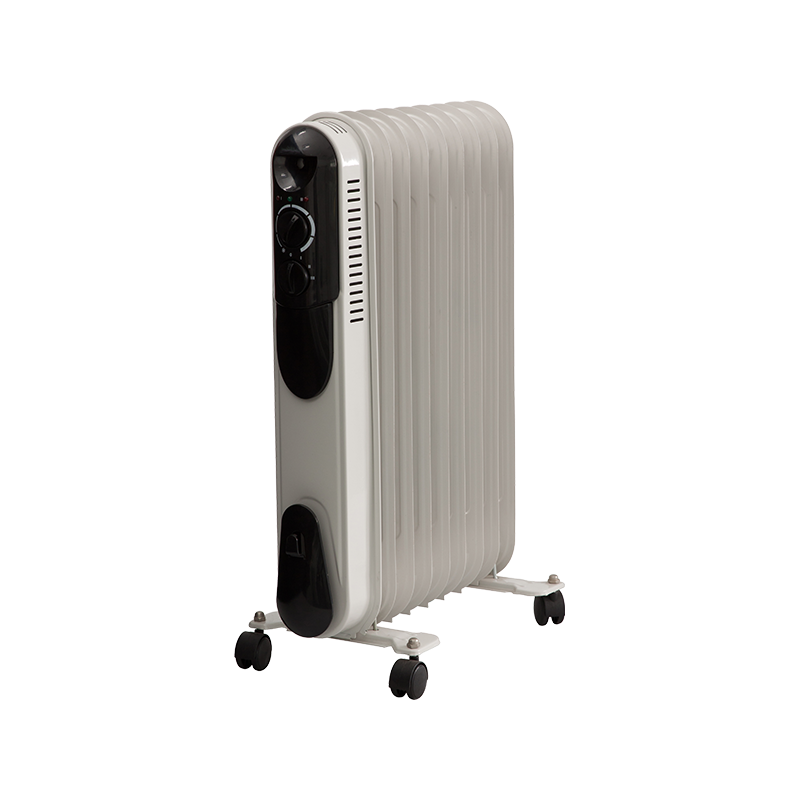
Oil-filled radiators run quietly and produce steady, radiant heat. They are especially well suited for bedrooms, living rooms, and any space where you want a constant temperature without fan noise. They take longer to warm up, but they retain heat and continue radiating after the thermostat cycles. For a 400 sq ft room, one large oil-filled radiator can heat a central area, but you will likely still need a second heater near the coldest wall.
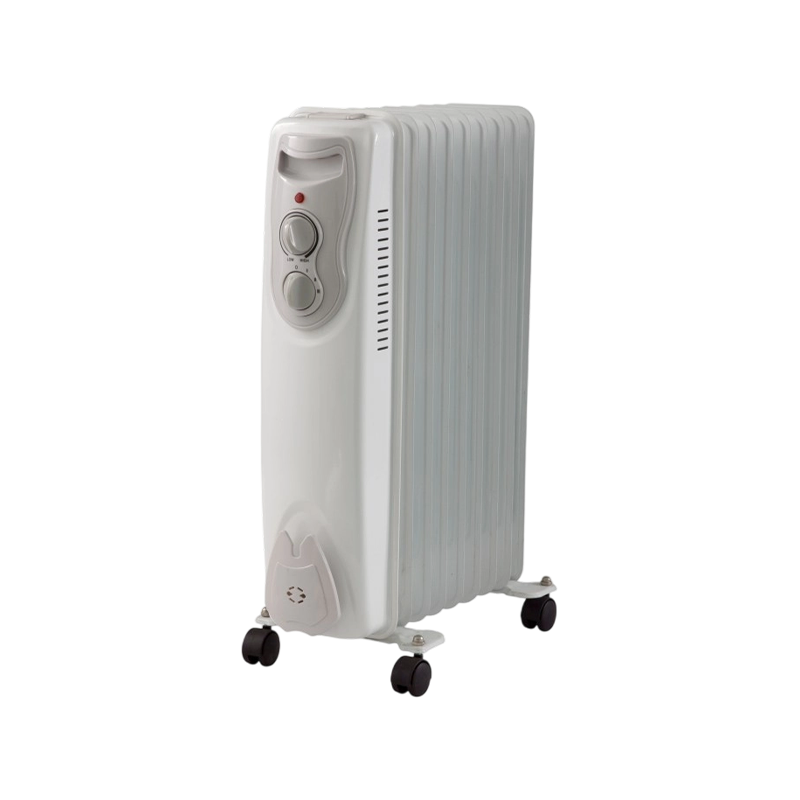 Oil-Filled Radiator for Even Heating in Large RoomsThis oil-filled radiator offers steady, radiant warmth with a large heating surface, making it effective for covering cold spots in a 400 sq ft space. Its energy-efficient design helps maintain consistent temperature without high energy costs.View Product →
Fan Heaters
Fan heaters produce fast, directional warm air. They work by drawing cool air over a heated element and pushing it out into the room. If you want to understand the mechanics behind this, our guide on how an electric fan heater works explains the process in detail, but the practical takeaway for a 400 sq ft space is simple: airflow matters as much as wattage. A 2,000-watt fan heater can move a lot of warm air, but for 400 sq ft you need to place it carefully so the heat does not just collect near the ceiling.
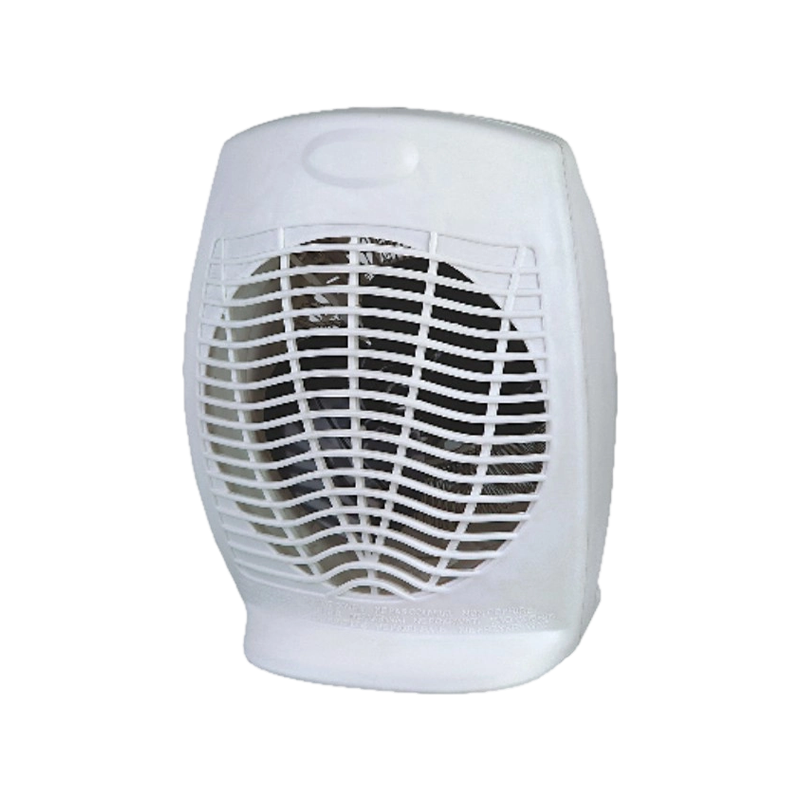 Portable Fan Heater with Dual Wattage for Small RoomsThis fan heater provides fast, directional heat with 1000W and 2000W settings, plus a cool air option. Its adjustable thermostat and overheat protection suit quick heating needs, but for a 400 sq ft room, placement is key to avoid heat collecting at the ceiling.View Product →
Quartz and Halogen Heaters
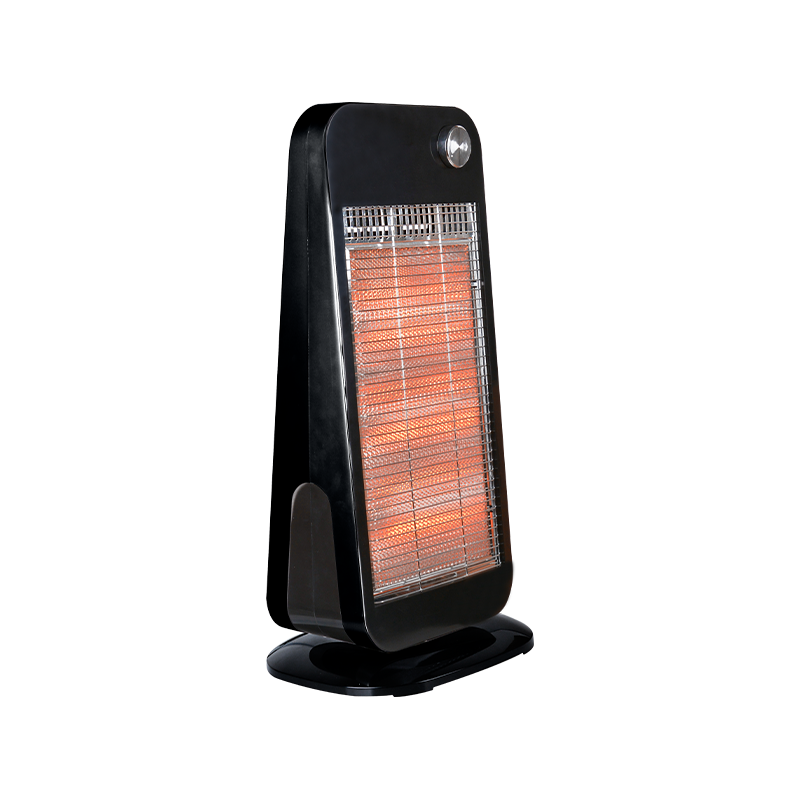
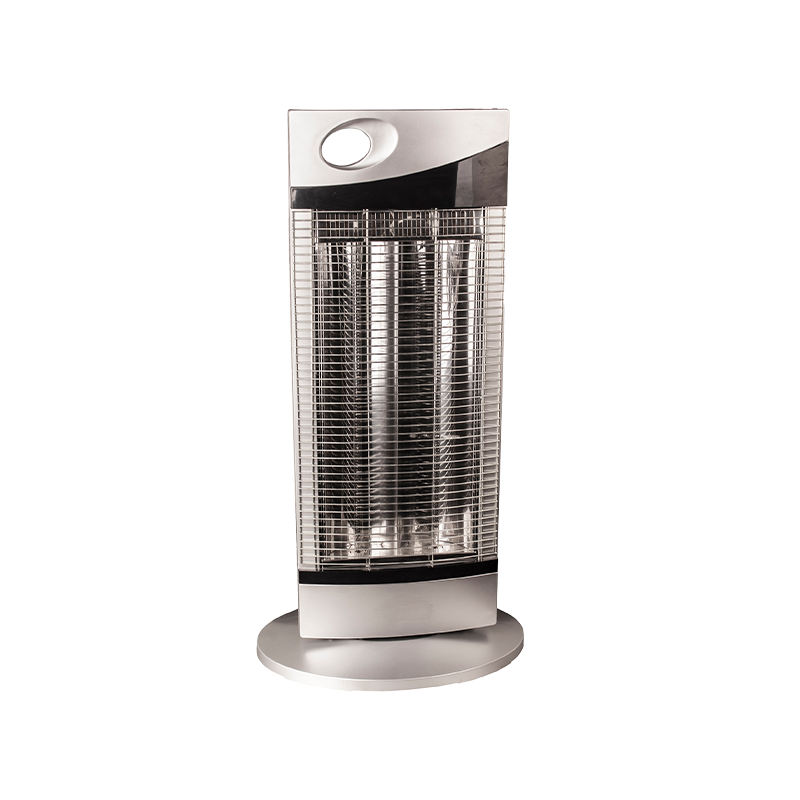
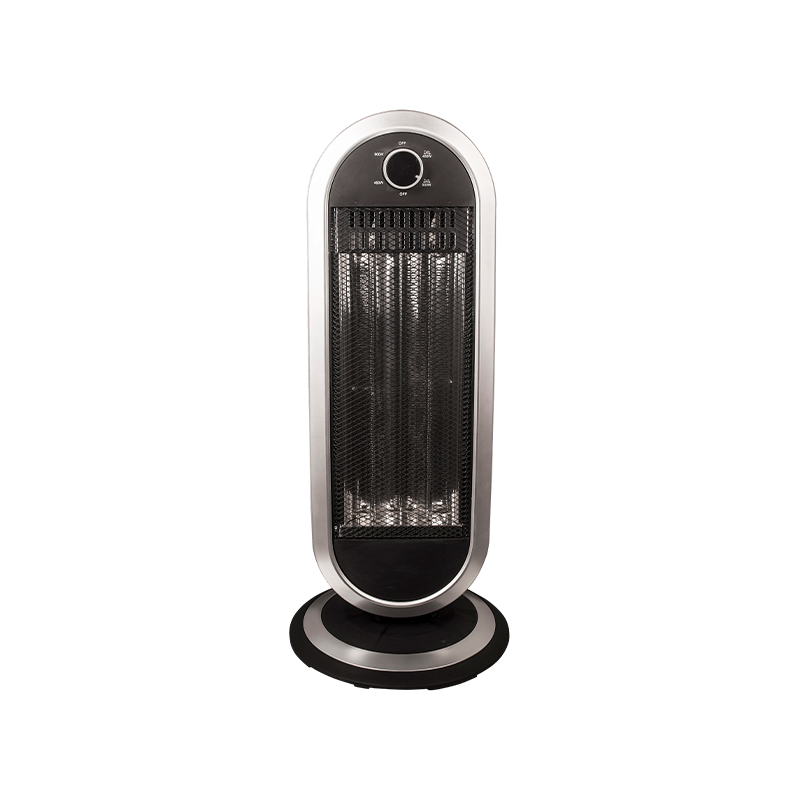
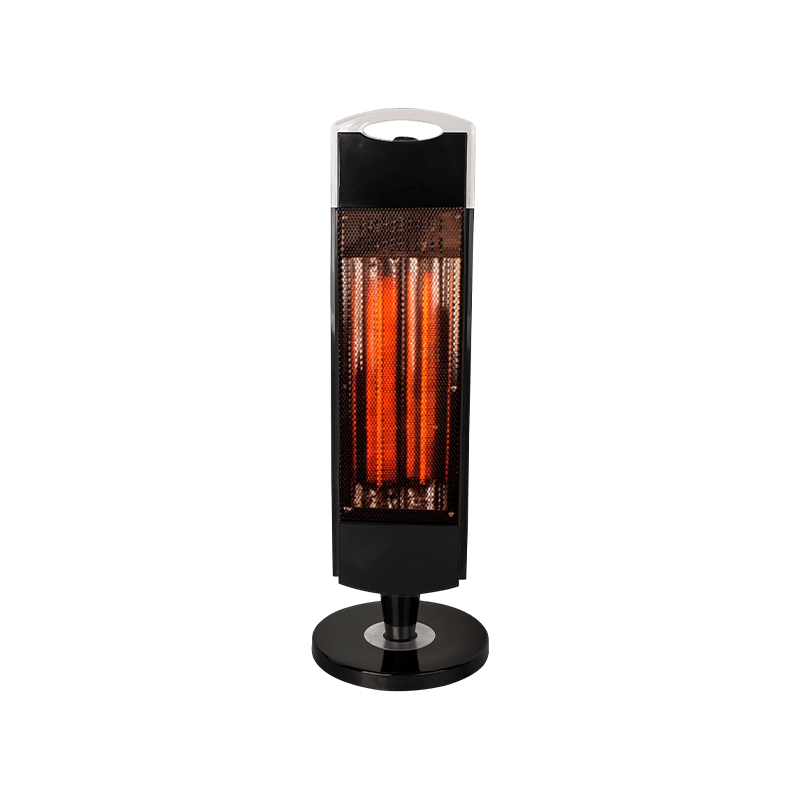
Quartz and halogen heaters are radiant heaters that warm objects directly in front of them. They act like a small sun. For a 400 sq ft room, they are best as spot heaters — for warming a workbench, a sofa, or a doorway — rather than as a whole-room solution. They are energy-efficient for short sessions, but the heat does not distribute evenly.
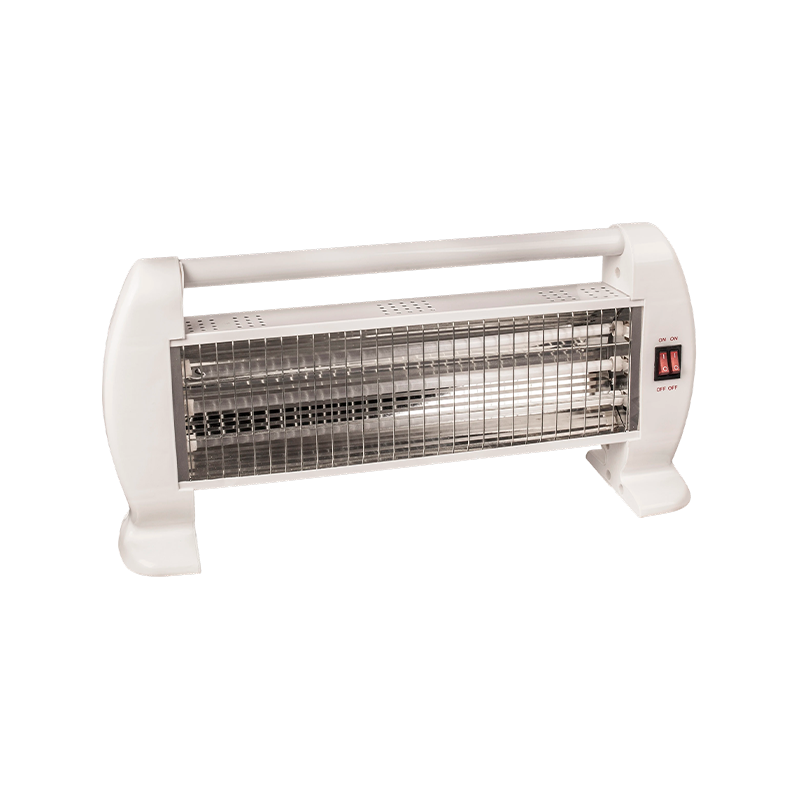 Low-Energy Quartz Heater for Targeted Spot HeatingThis quartz heater delivers focused radiant warmth, ideal for personal spaces like a sofa or desk. It warms objects directly, making it an energy-efficient choice for spot heating rather than whole-room coverage in a 400 sq ft area.View Product →
Real-World Scenarios: Bedroom, Garage, Workshop, and Office
The right heater choice depends on what you are actually heating. Here is how the same 400 sq ft area breaks down in common situations.
Unfinished Garage or Workshop
Garages are usually poorly insulated, with concrete floors and no ceiling. To heat a 400 sq ft garage, aim for 6,000 watts or more. A 5,000-watt hardwired unit is the cleanest solution, but it needs a 240-volt circuit. If you only have 120-volt outlets, use two 1,500-watt fan heaters or oil-filled radiators on separate circuits. Run a small fan to push warm air away from the walls and toward your workbench.
Bedroom or Living Room
In a well-insulated bedroom, a 400 sq ft space may still require 3,000–4,000 watts. Two oil-filled radiators work well because they do not blow dust or disturb sleep. Place one near the window and one on the opposite wall. Each can run at 1,500 watts on separate circuits. Alternatively, a single 2,000-watt fan heater can supplement a central heating system during the coldest hours.
Office or Small Commercial Space
For an office, noise matters. A quiet oil-filled radiator or a low-noise fan heater is better than a halogen heater that constantly clicks. Keep the heaters away from flammable materials and never leave them running unattended overnight. If you are operating a small commercial space, check your local electrical code before adding multiple heaters to the same circuit.
Buying Checklist for a 400 Sq Ft Electric Heater
Before you place an order, use this checklist to avoid the most common purchasing mistakes.
- Circuit capacity: Confirm which outlets are on separate circuits. Do not plan to run two 1,500-watt heaters on the same 15-amp circuit.
- Wattage, not size: Look at the wattage rating on the product label. A larger-looking heater does not necessarily produce more heat.
- Thermostat control: Choose a model with an adjustable thermostat or ECO mode. A simple on/off switch makes it harder to maintain a comfortable temperature.
- Safety protections: Tip-over protection and overheating shutoff are essential, especially in garages or rooms where children and pets are present.
- Placement plan: In a 400 sq ft room, map out the two or three positions you will use. The heater needs at least three feet of clearance from furniture and curtains.
- Noise tolerance: Oil-filled radiators and convection heaters are quiet. Fan heaters are louder. Listen to real product videos or read noise-level specs before you commit.
- Certification and compliance: If you are buying from a supplier that exports to Europe, check for CE certification and any specific safety marks your local market requires.
By working through these points, you can choose a heater that meets both the square footage and the practical limitations of your building.
Heating 400 sq ft with electricity is not a do-it-yourself guessing game. The numbers are simple: about 4,000 watts of capacity, delivered safely through the right circuits and equipment. A single 1,500-watt unit will not get you there, but a combination of 2,000-watt portable heaters or one 5,000-watt hardwired heater will. Prioritize safety, plan your electrical load, and select the heater type that matches your noise tolerance and heating habits.
PREV:No previous article
NEXT:120V Garage Heater with Thermostat: A Practical Buying Guide for Workshops
NEXT:120V Garage Heater with Thermostat: A Practical Buying Guide for Workshops
Interested in cooperation or have questions?
News
-
-
An electric fan heater is a popular device used to provide quick and efficient warmth in smaller spa...
READ MORE -
1. Exploring Fan Heaters: Efficient Heating Solutions The Basic Definition and Working Principle of ...
READ MORE -
Introduction to Tea Bar Machines What is a Tea Bar Machine? A tea bar machine represents a profound ...
READ MORE
- Add:
No. 1408, Guanfu Road, Fuhai Town, Cixi City, Ningbo City, Zhejiang Province, China. - Email:
sales@fsdomy.com - Tel:
0086-574-63567602 - Phone:
+86 13805816547
-
Get In Touch
-
Quick Links
Home Products About Us FAQ News Contact -
product Center
Electric Heater Water Dispenser Air Fan & Cooling Spare Part -
NEWS & INSIGHTS
Company News Instury News -
Follow
