


 English
 中文简体
中文简体
Introduction to Portable Industrial Air Coolers As temperatures rise, keeping large spaces cool and ...
READ MORE
How to Calculate Heater Size in Watts and BTU: A Practical Room-by-Room Guide
Content
Imagine a 20-square-meter living room that never gets comfortably warm no matter how long the heater runs. Swap in a larger unit and the room finally warms up, only for the electricity bill to climb while the heater runs for ten minutes at a time. Both outcomes come from the same mistake: skipping the heater size calculation. The conclusion up front: a correctly sized electric heater needs roughly 10 watts per square foot of floor area, or about 34 BTUs per square foot per hour, before you factor in ceiling height, insulation, and climate. Get that number right and you buy once. Get it wrong and you pay for it in comfort, energy use, and equipment life.
Start With the 10-Watt-per-Square-Foot Baseline
The 10 W/sq ft rule is the most widely used shortcut for electric room heating. It assumes an 8 ft ceiling, moderate insulation, and an indoor target of about 21°C (70°F). It is not a full heat-loss calculation, but for typical homes it is close enough to avoid the two classic sizing failures.
For electric heaters, the watt rating on the box is also the heat output. Resistance heating converts nearly all incoming electricity into heat, so there is no efficiency loss to discount: a 1,500 W unit delivers 1,500 W to the room, no more, no less. That keeps the arithmetic honest when you compare models.
Apply the baseline to floor area only. A 100 sq ft bedroom needs about 1,000 W; a 150 sq ft home office needs about 1,500 W; a 200 sq ft living room needs about 2,000 W; and a 300 sq ft open-plan space needs about 3,000 W. If the heater is rated in British Thermal Units instead, convert with the standard factor 1 W = 3.41 BTU/h. The 1,500 W office heater is therefore roughly 5,115 BTU/h, and the 2,000 W living-room heater is roughly 6,820 BTU/h.
The baseline exists for a reason. An undersized heater runs continuously, never reaches the set temperature, and wears out its controls while using more energy than its rating suggests. An oversized heater short-cycles: it hits the set point in a few minutes, switches off, then re-fires repeatedly, producing uneven heat and unnecessary relay wear. Sizing to the room, not to the lowest price, is the most effective way to avoid both.
Adjust for Ceiling Height, Insulation, and Window Loss
The 10 W/sq ft rule assumes an 8 ft ceiling. Because a heater warms air volume, not floor area, scale the baseline to the actual height:
Adjusted watts = floor area × 10 × (ceiling height ÷ 8).
A 200 sq ft room with a 10 ft ceiling needs about 2,500 W instead of 2,000 W. A 9 ft ceiling multiplies the baseline by 1.125, and a 12 ft ceiling multiplies it by 1.5.
Next, apply an insulation factor. Recent construction with double glazing can reduce the required output by 10% to 25%. Poorly insulated walls, drafty single-glazed windows, or an unheated room below will raise it by 25% to 50%. These corrections stack: a room with both a 10 ft ceiling and single-glazed windows needs both multipliers on the same baseline, and skipping even one step can understate the requirement by 30% or more.
The table below shows typical watt values for common room sizes after ceiling and insulation corrections.
| Room Size | 8 ft Ceiling Baseline | 10 ft Ceiling | Poor Insulation |
|---|---|---|---|
| 100 sq ft | 1,000 W / 3,410 BTU/h | 1,250 W | 1,500 W |
| 150 sq ft | 1,500 W / 5,115 BTU/h | 1,875 W | 2,250 W |
| 200 sq ft | 2,000 W / 6,820 BTU/h | 2,500 W | 3,000 W |
| 300 sq ft | 3,000 W / 10,230 BTU/h | 3,750 W | 4,500 W |
Finally, add a climate allowance. Large single-glazed windows add roughly 10% each, and rooms in cold regions or exposed positions such as garages and basements need another 10% to 20%. A 150 sq ft bedroom with two single-glazed windows and thin exterior walls can easily require 2,000 W instead of the 1,500 W baseline.
The BTU Route for Gas, Propane, and Larger Spaces
BTU ratings appear on gas, propane, and some commercial electric heaters, so you need a consistent way to compare them with the watt-based method. The complete working formula is:
Required BTU/h ≈ floor area × 34 × ceiling multiplier × insulation multiplier × climate multiplier.
Worked example: a 250 sq ft workshop with a 9 ft ceiling, poor insulation, and a cold climate. Start with 250 × 34 = 8,500 BTU/h. Multiply by 1.125 for the 9 ft ceiling to get 9,562 BTU/h. Apply 1.3 for poor insulation and 1.15 for climate, and the recommendation lands at about 14,300 BTU/h. Compare that against the output rating on the heater, not the room-size claim printed on the box.
For workshops, garages, and retail spaces, the residential baseline is often too low because those spaces have higher air leakage and wider temperature swings. Use the full formula with a poor-insulation multiplier of 1.5 and a climate multiplier based on your location, and you will come much closer to what a professional heat-loss calculation would produce. If you need only a rough comparison, remember that 1,500 W of electric heat always produces about 5,115 BTU/h, regardless of the product design. Efficiency differences between electric heater types affect comfort and heat distribution, not the raw conversion of electricity into heat. For a closer look at how fan heaters behave in practice and what to check before choosing one, see this practical fan-heater guide.
Match the Calculated Rating to the Right Heater Type
Once you have the watt target, choose the heater family that fits how the room is used. The same wattage behaves differently across designs, and the calculation only tells you how much output you need, not how to deliver it.
For small rooms up to about 150 sq ft, including bedrooms, studies, and home offices, a fan heater with a thermostat gives fast warm-up and reacts quickly to temperature changes. A 2000 W portable fan heater for small rooms covers a 150 to 200 sq ft space while keeping the footprint small. A fan heater reaches full output in about a minute, which makes it a good match for rooms that are used in short bursts.
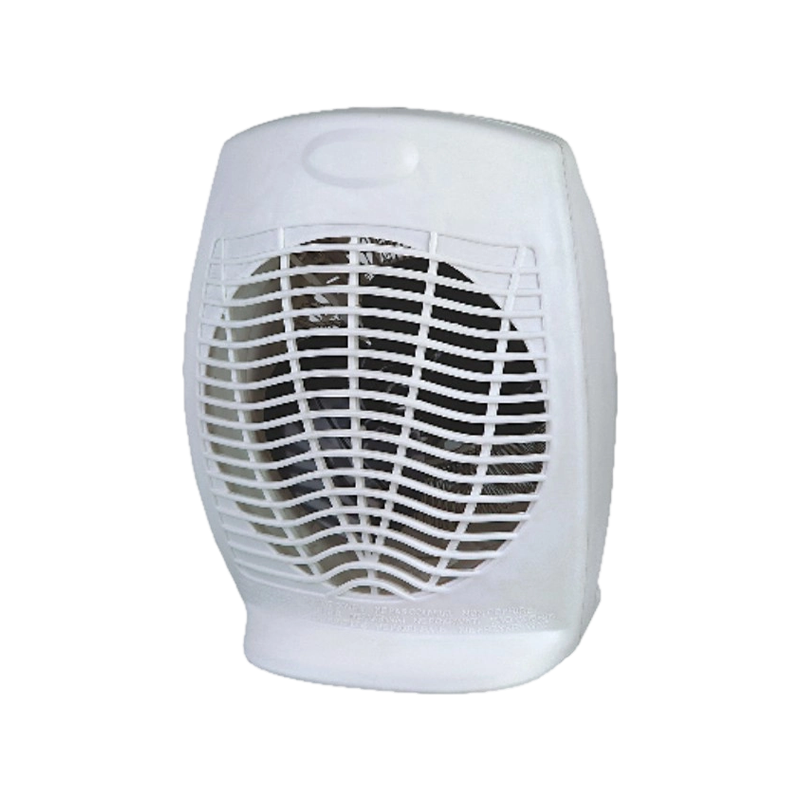 Wholesale HFH-803S 2000w portable fan heater for small room Suppliers, Factory -NINGBO FASHIDA APPLIANCE TECHNOLOGY CO., LTD is China wholesale HFH-803S 2000w portable fan heater for small room suppliers and factory, ...View Product →
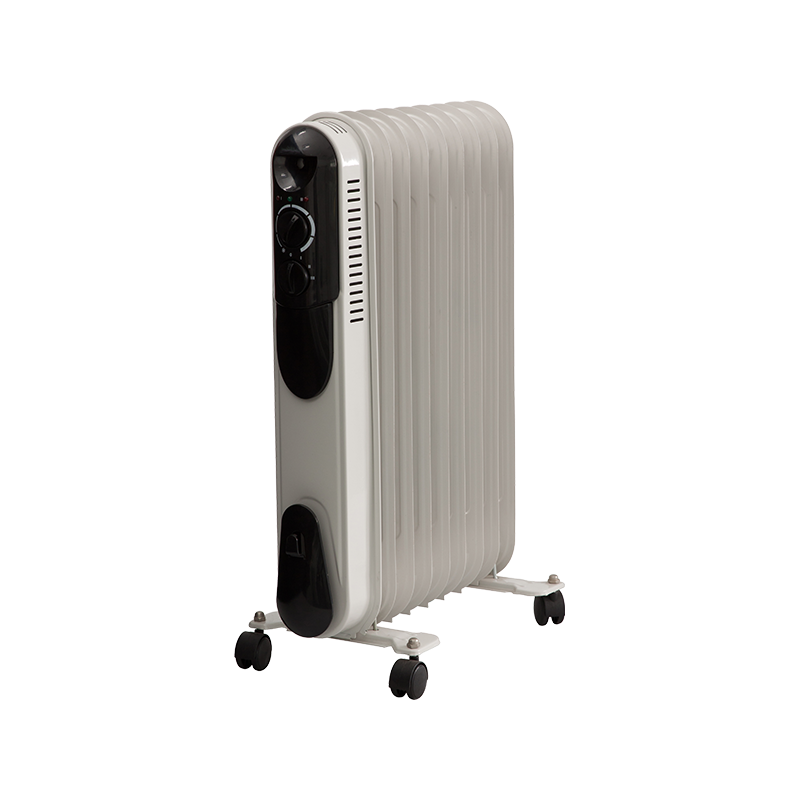
For larger spaces of 250 sq ft and up, oil-filled radiators release heat slowly and spread it across the room, reducing the cold spots you often feel with a direct fan blast. If your calculation lands near 2,500 W, an oil-filled radiator sized for large-room heating delivers that output steadily for hours. The trade-off is a slower warm-up, which matters less in a room that stays occupied for long periods.
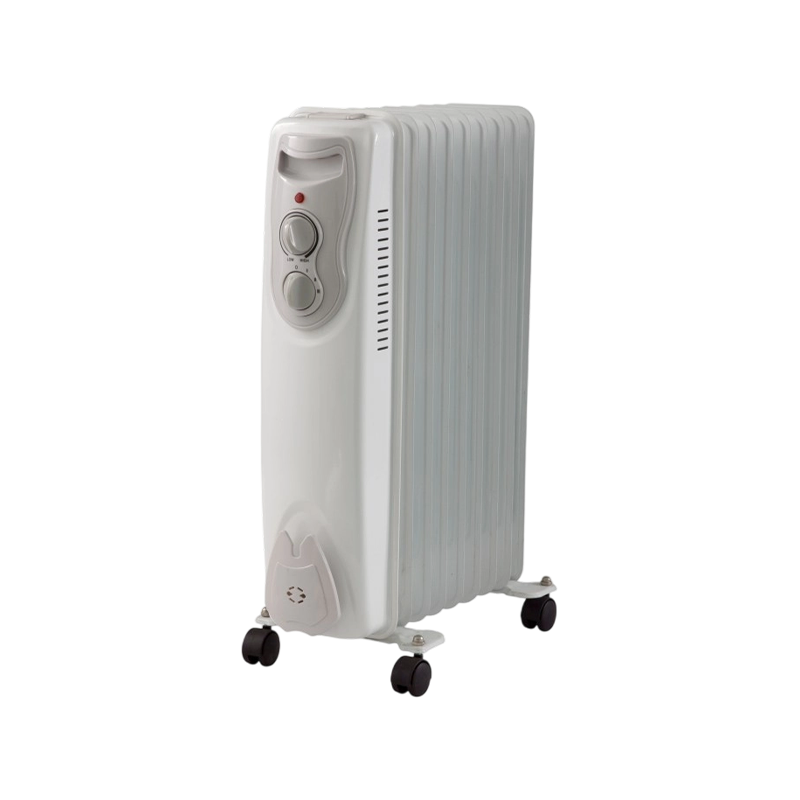 Wholesale NY-C oil filled radiator for large room heating Suppliers, Factory - NNINGBO FASHIDA APPLIANCE TECHNOLOGY CO., LTD is China wholesale NY-C oil filled radiator for large room heating suppliers and factory, de...View Product →
When the calculated size sits between two standard ratings, choose the larger unit only if it has thermostat or ECO control. For example, an energy-saving oil-filled radiator with ECO mode holds the set temperature without the constant on-off cycling that drives up consumption. This is also the moment to decide between the instant response of a fan heater and the sustained warmth of an oil-filled radiator; how oil-filled radiators maintain even temperature explains why they suit continuous heating.
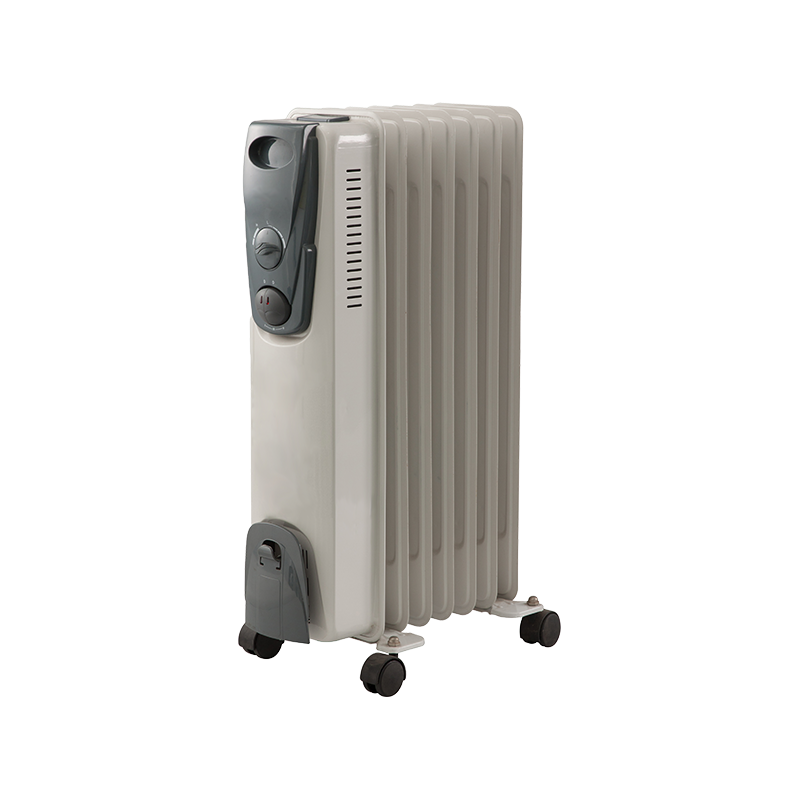 Wholesale NY-E oil filled radiator with eco mode energy saving Suppliers, FactorNINGBO FASHIDA APPLIANCE TECHNOLOGY CO., LTD is China wholesale NY-E oil filled radiator with eco mode energy saving suppliers and factor...View Product →
Three Checks Before You Buy
- Measure the actual room, not the floor plan. Include open doorways to corridors and heated closets, because those spaces draw heat from the same air volume.
- Confirm the circuit voltage before choosing a wattage. A standard 120 V / 15 A circuit supports about 1,440 W of continuous load, so anything above roughly 1,500 W usually needs a 240 V circuit or a dedicated feed.
- Verify the control set. A thermostat or ECO mode is not optional when the room falls between two standard ratings; it is the feature that turns a slightly oversized heater into a stable and efficient one.
Calculating heater size is a five-minute job with a tape measure and a calculator. Use the 10 W/sq ft baseline, correct it for ceiling height, insulation, and climate, convert to BTU when needed, then match the result to a heater type that fits the way the room is used. Keep the calculation note with the receipt: if the room still does not reach temperature, the gap usually points to air leakage or a voltage issue rather than a defective heater.
PREV:120V Garage Heater with Thermostat: A Practical Buying Guide for Workshops
NEXT:The Best Electric Heater for Your Garage: Size, Safety, and Running Costs
NEXT:The Best Electric Heater for Your Garage: Size, Safety, and Running Costs
Interested in cooperation or have questions?
News
-
-
An electric fan heater is a popular device used to provide quick and efficient warmth in smaller spa...
READ MORE -
1. Exploring Fan Heaters: Efficient Heating Solutions The Basic Definition and Working Principle of ...
READ MORE -
Introduction to Tea Bar Machines What is a Tea Bar Machine? A tea bar machine represents a profound ...
READ MORE
- Add:
No. 1408, Guanfu Road, Fuhai Town, Cixi City, Ningbo City, Zhejiang Province, China. - Email:
sales@fsdomy.com - Tel:
0086-574-63567602 - Phone:
+86 13805816547
-
Get In Touch
-
Quick Links
Home Products About Us FAQ News Contact -
product Center
Electric Heater Water Dispenser Air Fan & Cooling Spare Part -
NEWS & INSIGHTS
Company News Instury News -
Follow
