


 English
 中文简体
中文简体
Introduction to Portable Industrial Air Coolers As temperatures rise, keeping large spaces cool and ...
READ MORE
1500W Heater Room Size: How Many Square Feet Can a 1500W Heater Heat Effectively?
Content
If you are comparing 1500W heaters, start with a simple fact: a standard, well-insulated room of about 150 square feet can be kept comfortable by one 1500W unit when it is used for supplemental heating. That is roughly a 10x15 ft bedroom or a 12x12 ft office. If the heater becomes the only heat source, the same unit still works, but the practical area drops to about 100 to 125 square feet.
How Much Room Can a 1500W Heater Actually Heat?
The most common sizing method for portable electric heaters is simple: plan for roughly 10 watts per square foot if the heater only needs to supplement an existing heat source. At 1500W, this gives you 150 square feet. It is a useful planning figure because it matches the way most people use a portable heater: to warm the spot where they are sitting or to boost a cold bedroom before bed.
When a room must rely on the heater as its primary source, the load changes. A 15 watts per square foot rule is more realistic because you are responsible for all the heat loss through walls, windows, doors, and the ceiling. A 1500W heater then covers about 100 square feet. Poorly insulated rooms, high ceilings, or a drafty floor plan can raise the requirement to 18-25 watts per square foot, leaving just 60 to 83 square feet for the same heater.
The table below summarizes these three load levels.
| Heating load | Wattage needed per sq ft | Area a 1500W heater can cover |
|---|---|---|
| Supplemental spot heating | 10 W | 150 sq ft |
| Whole-room comfort, average insulation | 12-15 W | 100-125 sq ft |
| Whole-room comfort, poor insulation or high ceilings | 18-25 W | 60-83 sq ft |
These estimates assume a standard ceiling height of about 8 feet. Add 10% for every additional 2 feet of ceiling height, because warm air rises and fills the space above your head before it reaches the floor.
Three Heater Types That Use 1500W, and When Each Makes Sense
The same 1500W input delivers different feelings in the room. The heater type changes how quickly you feel the heat, how evenly it spreads, and how long the room stays warm after the unit switches off.
Fan and ceramic PTC heaters
Fan heaters and ceramic PTC heaters push air across a heating element, so they warm a room faster than almost any other compact heater. They are good for a home office, a bedroom you need to warm in ten minutes, or a small living area where the central heating is not strong enough. A constant fan also means you hear a low noise level. A thermostat helps prevent the room from overheating and cuts the power when the target temperature is reached.
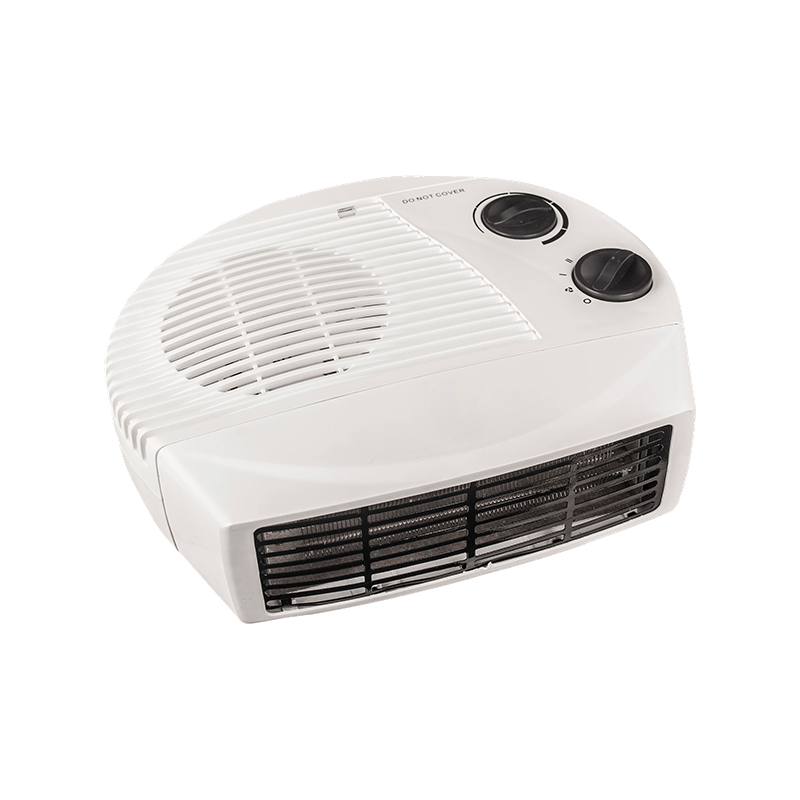 Compact Fan Heater with Thermostat and Dual Power SettingsThis fan heater offers 1000W and 2000W options, a cool-air mode, and adjustable thermostat. It quickly warms small rooms, with overheat protection and an indicator light for safe, year-round use.View Product →
Oil-filled radiators and mica panel heaters
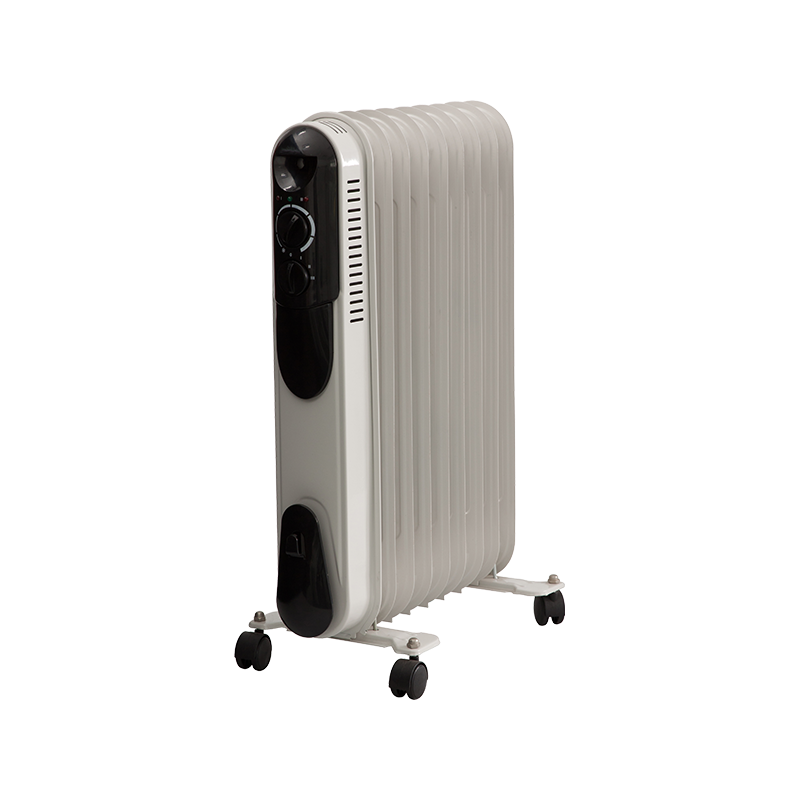
Oil-filled radiators work differently. They heat the oil inside the unit, and that oil releases heat slowly to the surrounding air. The result is a more uniform temperature with no strong air movement. This style works well for a bedroom, a nursery, or any room where you plan to stay for several hours. A 1500W oil-filled heater takes longer to warm up, but the room stays comfortable after the thermostat turns the unit off.
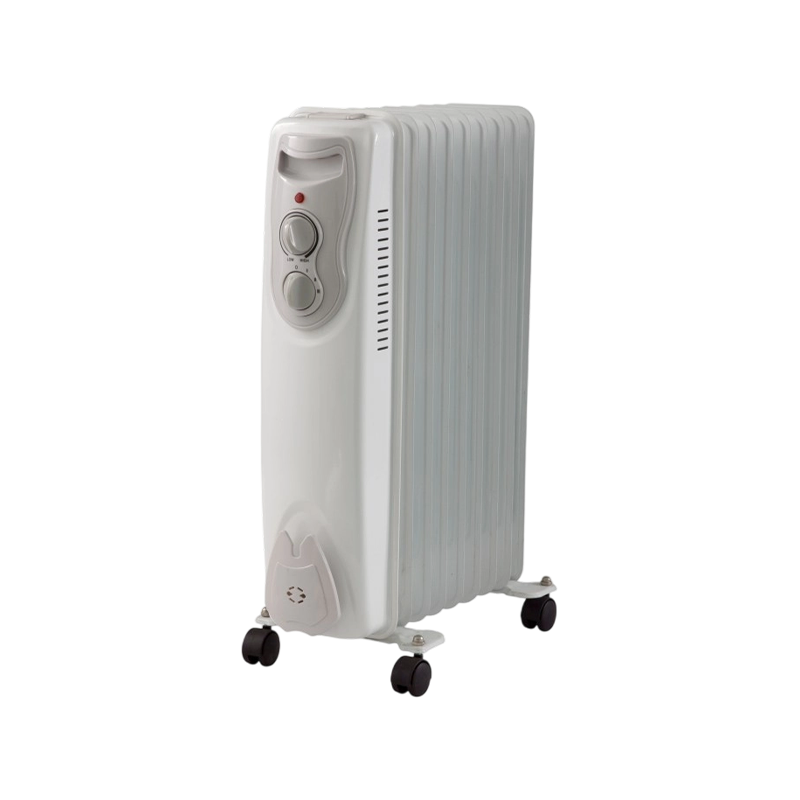 Oil-Filled Radiator for Large Room Heating with Uniform WarmthWith a large heating surface and efficient radiation, this oil-filled radiator delivers steady, even warmth across large spaces. Its energy-efficient design maintains comfort for hours without strong air movement.View Product →
Infrared, quartz, and carbon heaters
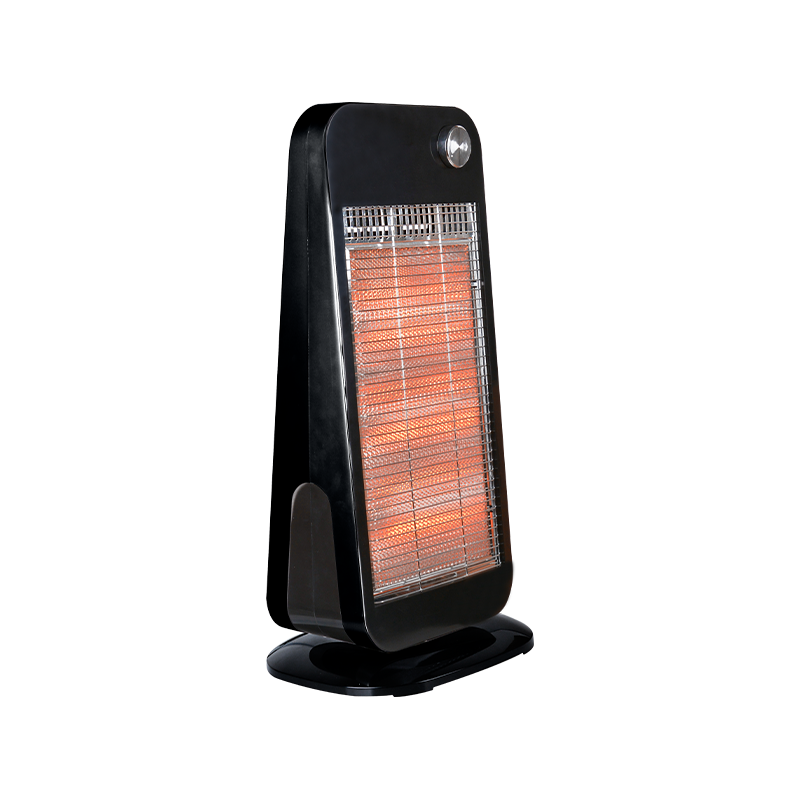
Infrared heaters, including quartz and carbon models, do not heat the air much. They emit radiant energy that warms people and objects directly, like the sun. This can feel more immediate, even in a cool room. A quartz heater works well for a single desk, a bathroom, or a drafty corner where you need local warmth quickly, but it is less useful for spreading heat across a large room.
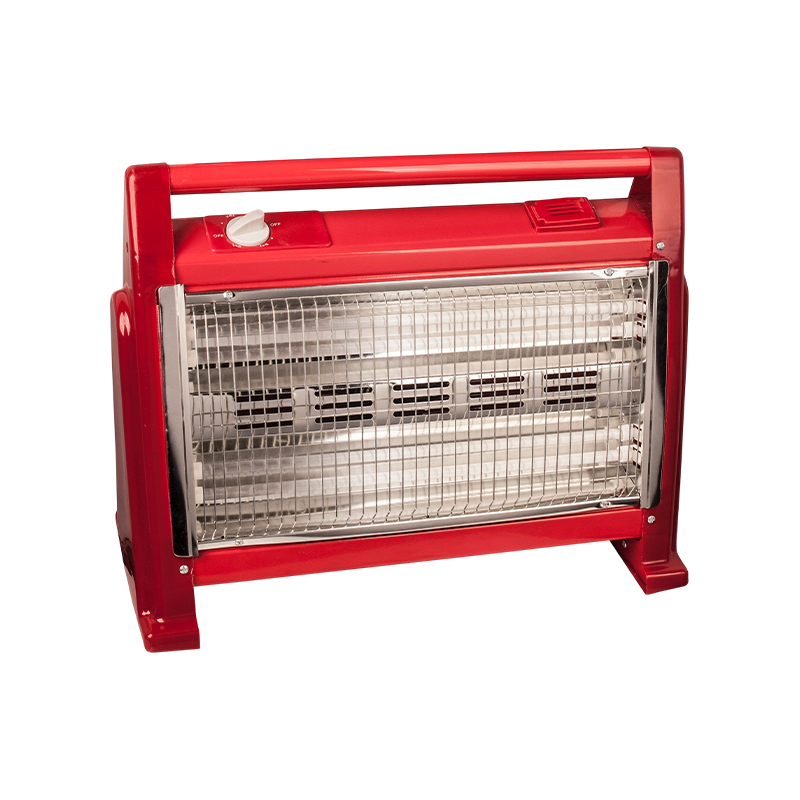 Quiet Quartz Heater for Small Rooms and Spot HeatingThis quartz heater provides direct radiant warmth, ideal for small rooms or drafty corners. It operates quietly, making it suitable for bedrooms or studies where minimal noise is desired.View Product →
How to Estimate Your Room's Heating Requirement Before You Buy
You can avoid buying the wrong heater by doing a small calculation before you order. Measure the length and width of the room, multiply them to get the square footage, and then apply a correction for your insulation and ceiling height.
| Room condition | Adjustment to the 10 W/sq ft rule |
|---|---|
| Well insulated, modern windows | No change |
| Average insulation, standard windows | Add 20-30% |
| Poor insulation, single-glazed windows | Add 40-60% |
| Ceiling higher than 8 ft | Add 10% per extra 2 ft |
| Open plan or no air circulation | Add 25% or more |
Let us walk through one example. A 10x12 ft room is 120 square feet. With average insulation, multiply 120 by 12-15 watts, which gives you 1440-1800 watts. A single 1500W fan heater with a thermostat is enough for this room. A 15x15 ft room is 225 square feet. Multiply that by 12-15 watts and you get 2700-3375 watts. One 1500W heater will struggle. You would be better off with two smaller units or a higher-wattage configuration.
If you want to see how fan heaters behave in different room sizes, our guide explains the practical trade-offs between quick warm-up and steady heat.
Practical Buying Considerations for 1500W Heaters
Wattage is only one part of the decision. A 1500W heater that runs constantly because it lacks a thermostat can waste more energy than a lower-wattage heater with accurate cycling. For a 1500W unit, running for one hour uses 1.5 kWh. If your electricity rate is 0.15 USD per kWh, one hour costs about 0.22 USD. Running it for eight hours would cost about 1.83 USD. A thermostat or ECO mode reduces this because the heater only draws full power when it is actually needed.
Safety matters even more than room size. Look for tip-over protection, overheat protection, and an approval mark relevant to your market. If you are buying for a European customer or a European project, CE certification is a practical requirement, not an optional feature. A heating element that is not approved for continuous use can become a risk in a bedroom, especially if the unit is left near curtains or a bed.
One of the common mistakes is assuming that a larger room always needs a higher-wattage heater. A 1500W heater placed in a room that is far too large will run almost continuously, and the room may still feel cold at the edges. If a room is significantly smaller than the heater's rating, the thermostat will cycle on and off too often, which can feel uncomfortable. Matching the heater to the room size and the use pattern is the best way to get both comfort and efficiency.
For most people, the short answer is enough: a 1500W heater covers about 150 square feet for supplemental heat and about 100 to 125 square feet when it must heat the room alone. The next step is to measure your room, check your insulation, and choose the heater type that matches how you intend to use the space. With a thermostat and the right wattage, a 1500W heater is a practical solution for bedrooms, offices, and small living areas.
PREV:No previous article
NEXT:400 Sq Ft Electric Heater: Power Needs, Safety Limits, and Realistic Buying Options
NEXT:400 Sq Ft Electric Heater: Power Needs, Safety Limits, and Realistic Buying Options
Interested in cooperation or have questions?
News
-
-
An electric fan heater is a popular device used to provide quick and efficient warmth in smaller spa...
READ MORE -
1. Exploring Fan Heaters: Efficient Heating Solutions The Basic Definition and Working Principle of ...
READ MORE -
Introduction to Tea Bar Machines What is a Tea Bar Machine? A tea bar machine represents a profound ...
READ MORE
- Add:
No. 1408, Guanfu Road, Fuhai Town, Cixi City, Ningbo City, Zhejiang Province, China. - Email:
sales@fsdomy.com - Tel:
0086-574-63567602 - Phone:
+86 13805816547
-
Get In Touch
-
Quick Links
Home Products About Us FAQ News Contact -
product Center
Electric Heater Water Dispenser Air Fan & Cooling Spare Part -
NEWS & INSIGHTS
Company News Instury News -
Follow
