


 English
 中文简体
中文简体
Introduction to Portable Industrial Air Coolers As temperatures rise, keeping large spaces cool and ...
READ MORE
The Best Electric Heater for Your Garage: Size, Safety, and Running Costs
Content
- 1 Start with Wattage: Match the Heater to the Garage Volume
- 2 Rapid Heat vs. Steady Warmth: Choosing the Heating Method
- 3 Safety Features That Actually Matter in a Garage
- 4 Running Cost and Energy Efficiency
- 5 Mounting and Portability
- 6 How You Use the Garage Matters More Than the Heater
- 7 The Verdict: Start with a 2,000 W PTC Fan Heater
Open the garage door on a cold January morning and the difference between indoor and outdoor temperatures hits you before you even turn on the light. A garage is not a typical room. Bare concrete, uninsulated walls, a large door that seals poorly, and often no airtight ceiling mean the heat you pay for can vanish as fast as it is produced. That is why choosing the best electric heater for a garage is less about finding the cheapest device and more about matching the heater to the size of the space, how long you stay in it, and what else you store there. The short answer: for most garages, a 2,000 W PTC ceramic fan heater or an oil-filled radiator provides the most practical mix of speed, safety, and running cost. Which one wins depends on whether you need heat for a 20-minute repair or for a three-hour workout.
Start with Wattage: Match the Heater to the Garage Volume
A common mistake is to assume that a 1,500 W space heater rated for a living room will handle an attached garage. In reality, the cold walls and floor draw heat away, so you need around 10–12 W per square foot, or 80–120 W per square metre. If the heater is undersized, it will run without rest, never reach the set temperature, and consume more electricity than a properly sized unit.
| Garage Size | Minimum Power | Typical Setup |
|---|---|---|
| 20 m² / 215 sq ft | 1,200 W | One compact PTC heater |
| 36 m² / 400 sq ft | 2,000 W | One 2 kW fan heater |
| 50 m² / 540 sq ft | 3,000 W | Two 1,500 W units or one 2 kW plus one 1 kW |
| 80 m² / 860 sq ft | 4,000 W | Multiple units or heavy-duty oil-filled radiators |
If the garage is detached, uninsulated, or located in a region with temperatures below -10°C, add about 20% more power. A 2,000 W unit that works well in a carpeted home office will struggle in the same space when the concrete floor is frozen.
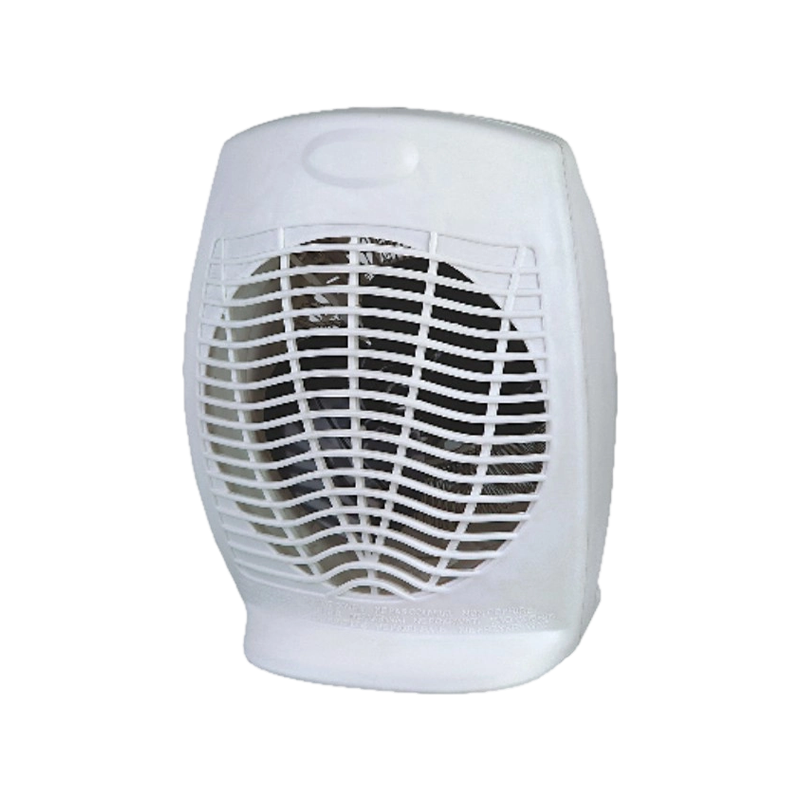 Portable 2000W Fan Heater for Small Rooms with Dual Heat SettingsThis fan heater offers 1000W and 2000W options, plus a cool-air mode and adjustable thermostat. Its rapid warmth suits short tasks in a small garage or room, while overheat protection ensures safe operation.View Product →
Rapid Heat vs. Steady Warmth: Choosing the Heating Method
Forced-air fan heaters push air through a heated element, so you feel a warm breeze within seconds. That makes them ideal for short tasks. Oil-filled radiators heat a thermal reservoir and release it gradually, so the garage stays comfortable after the heater switches off. PTC ceramic heaters bridge the gap because they self-regulate current as the element gets hotter.
If you use your garage as a home gym and plan to stay for an hour, the fan heater will reach working temperature roughly three times faster than an oil radiator. If you are sanding furniture or restoring a car and sit still for hours, the oil-filled radiator creates a softer, steadily rising warmth that does not singe nearby objects.
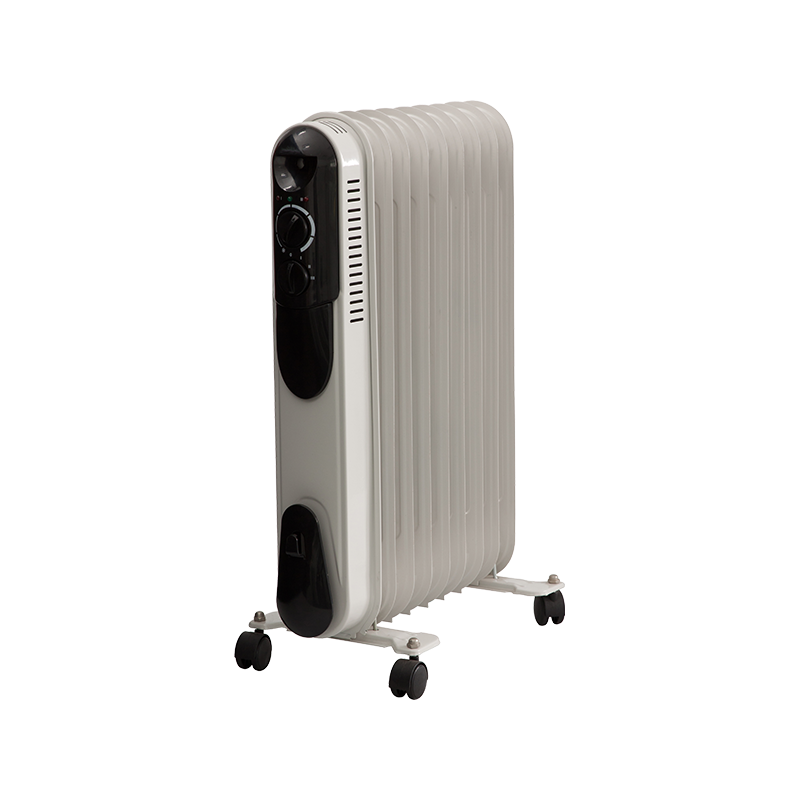
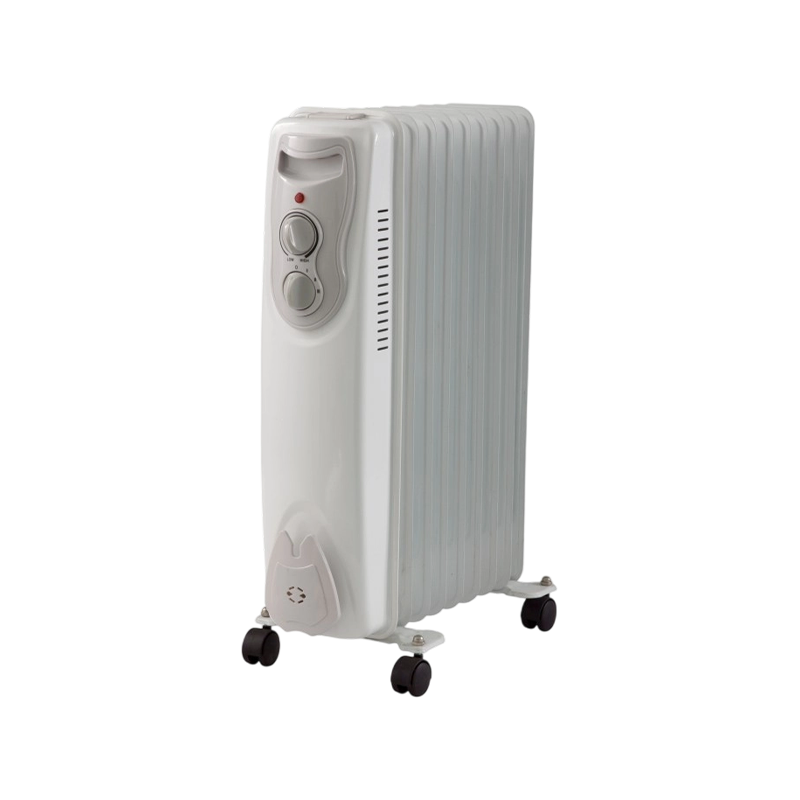 Oil-Filled Radiator for Large Room Heating with Steady WarmthDesigned for even heat distribution, this oil-filled radiator warms large spaces gradually and retains heat for continued comfort. Ideal for long, still sessions in a garage where constant warmth is needed.View Product →
Safety Features That Actually Matter in a Garage
In a garage, a heater can be knocked by a ladder, a bicycle, or a dropped tool. The tip-over switch must cut power at an angle around 30 degrees. Overheat protection prevents the element from becoming a fire risk if the air intake is blocked. If the garage is used for woodworking, choose a device with a sealed heating room and an exterior skin that stays below 60°C. Also look for CE marking in Europe, and check that the certification label lists the exact wattage and electrical input.
The heaters we export to Europe are submitted to CE and RoHS tests, and models in our fan heater line include dual overheat sensors as standard. That gives buyers one less reason to worry when the unit is left running unattended. For a deeper look at how a fan heater works and where its limits are, see this guide to electric fan heaters.
Running Cost and Energy Efficiency
A 2,000 W heater on full power draws 2 kWh per hour. With a thermostat set to 18°C, the average duty cycle in a 400 sq ft garage is about 60%, so you will see around 1.2 kWh per hour. At a typical electricity price of USD 0.15 per kWh, that is roughly USD 0.18 per hour.
PTC ceramic heaters do not waste excess energy at higher temperatures because the element's resistance changes, which reduces power as it approaches the set point. Oil-filled radiators store heat, so even after the thermostat switches off, they continue to radiate warmth for up to 20 minutes. Halogen and quartz heaters are cheaper to buy but run at higher surface temperatures and have a shorter lifespan in dusty environments. For a garage, the slight extra cost of a PTC or oil-filled unit usually pays for itself within two winters.
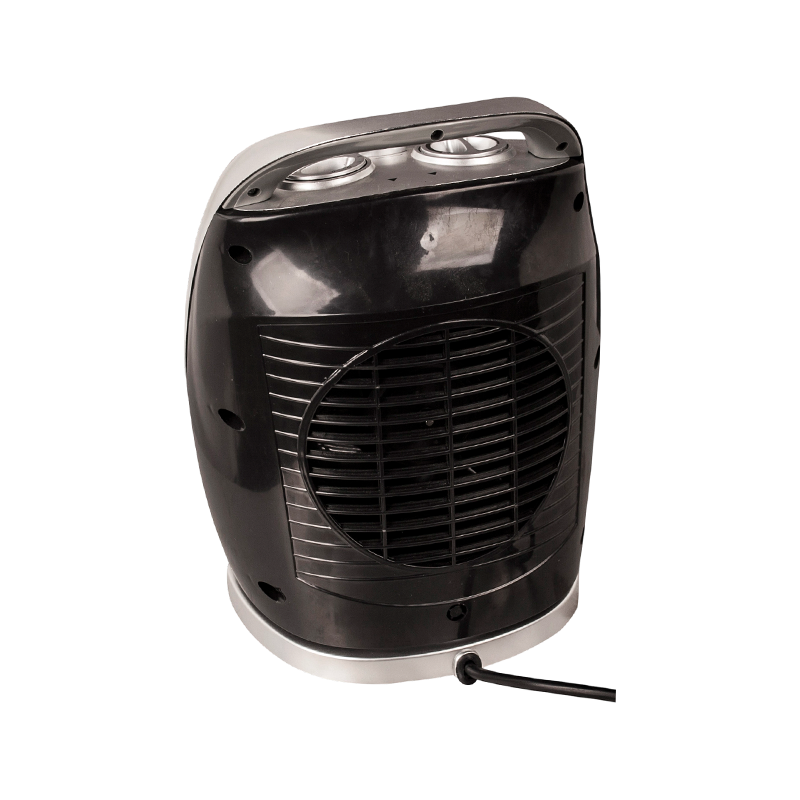 Oscillating PTC Fan Heater with Adjustable Modes and Safety Cut-OffThis ceramic heater has 750W and 1500W settings, oscillating function, and cool/warm/hot modes. Its self-regulating PTC element and tip-over switch provide efficient, safety-conscious warmth for a garage.View Product →
Mounting and Portability
Wall-mounted heaters free up floor space, but they require a permanent power supply and are harder to reposition. Portable units with a carry handle or castors let you move heat exactly where you need it—from the workbench to the top of the car. If the garage is shared, a small footprint and a cool-touch body reduce the chance of damage. A fan heater with a rotating oscillating base spreads air evenly, while a flat oil-filled radiator fits under a table or between tool cabinets.
Check the power cord length. A heater with a 1.8 m cord often forces you to use an extension cable, which in a garage with oil or snow on the floor can be a tripping and fire hazard. A 2.5 m cord gives more flexibility without additional wiring.
How You Use the Garage Matters More Than the Heater
Ask yourself three questions. Do you need heat for a specific task or for a whole evening? Is the garage detached or attached? What else is stored in the room? A detached garage with a concrete floor and an old wooden door needs a heater capable of being used with a thermostat and a low surface temperature. An attached garage may already gain some heat from the house; a 1,500 W unit might be enough for occasional use. If you store solvents, use a heater without exposed glowing elements, because combustible fumes can be ignited.
If the garage doubles as a workshop, place the heater away from the workbench and keep the air intake clear of sawdust. For a garage gym, install the heater at counter height rather than on the floor so it does not suck up dust from shoes or gym mats.
The Verdict: Start with a 2,000 W PTC Fan Heater
Unless you have an exceptional reason, the smoothest starting point is a 2,000 W PTC ceramic fan heater with an oscillating base, a tip-over switch, and a thermostat. It heats the garage in minutes, costs less to run than a halogen heater at the same wattage, and works well in a workshop or garage gym. If you prefer quiet, steady warmth for a long session, choose a portable oil-filled radiator with the same power and look for a model with a carry handle and a sealed body. If the garage is larger than 50 square metres, buy two heaters and place them on opposite sides instead of expecting one unit to do everything. Always check the certification label before you buy, and never run a heater from an extension cord meant for light loads.
Browse our complete line of electric heaters and PTC solutions to see how they are built, or contact us to discuss custom wattages and safety options for your market.
PREV:How to Calculate Heater Size in Watts and BTU: A Practical Room-by-Room Guide
NEXT:Understanding Electric Heaters: How They Work and What Sets Them Apart
NEXT:Understanding Electric Heaters: How They Work and What Sets Them Apart
Interested in cooperation or have questions?
News
-
-
An electric fan heater is a popular device used to provide quick and efficient warmth in smaller spa...
READ MORE -
1. Exploring Fan Heaters: Efficient Heating Solutions The Basic Definition and Working Principle of ...
READ MORE -
Introduction to Tea Bar Machines What is a Tea Bar Machine? A tea bar machine represents a profound ...
READ MORE
- Add:
No. 1408, Guanfu Road, Fuhai Town, Cixi City, Ningbo City, Zhejiang Province, China. - Email:
sales@fsdomy.com - Tel:
0086-574-63567602 - Phone:
+86 13805816547
-
Get In Touch
-
Quick Links
Home Products About Us FAQ News Contact -
product Center
Electric Heater Water Dispenser Air Fan & Cooling Spare Part -
NEWS & INSIGHTS
Company News Instury News -
Follow
